Hotels with a point of view.
Rome is often associated with history, but some of its most interesting hotels are looking in a different direction. These are places shaped by strong ideas, whether through design, art, food, architecture or a particular way of seeing the city. Some occupy centuries-old buildings, others sit in neighbourhoods many visitors never reach, but all begin with a clear point of view. The best cool hotels in Rome do not simply provide a place to stay. They offer a distinct perspective on the city around them.
• Design-conscious travellers
• Hotels with a strong identity
• Creative city breaks
• Travellers who choose hotels as carefully as destinations
• Traditional luxury is the priority
• You prefer classic grand hotels
• Facilities matter more than character
• A hotel is simply a place to sleep
Centro Storico
The Rome people imagine before they arrive
Romantic Hotels in Rome
Hotels for the Rome people imagine.
Hotels with Pools
A place to reset between long Roman days
Rome has never struggled for beautiful hotels. Interesting hotels are harder to find. The ones that leave the strongest impression tend to be built around a clear idea, whether that comes through design, culture, food, architecture or the personality of the people behind them. They shape the experience of the city rather than simply providing a backdrop to it. The best cool hotels in Rome are memorable because they stand for something beyond hospitality alone.
These are the cool hotels in Rome we would book first when character matters as much as location, each chosen for the strength of its identity and the perspective it offers on the city.
A Design Hotels stay built around the beauty of imperfection.
G-Rough occupies a seventeenth-century townhouse near Piazza Navona, but unlike many historic hotels in Rome, very little has been polished away. Worn tile floors, unrestored frescoes and layers of the building’s history remain visible throughout, reflecting founder Gabriele Salini’s belief that character matters more than perfection. The ten suites are filled with exceptional Italian design pieces from the 1930s to the 1970s, creating the feeling of staying inside the home of a passionate collector rather than a conventional hotel. A distinctly Roman hotel built for people who notice the details.
Design-conscious travellers, creative city breaks and guests who appreciate hotels with a strong aesthetic identity.
A historic Roman palazzo reimagined through the lens of travel.
Orient Express La Minerva brings together two things that rarely coexist successfully: deep respect for history and a genuinely fresh point of view. Occupying Palazzo Fonseca, a seventeenth-century residence beside the Pantheon, it became the first Orient Express hotel in the world when it opened in 2025. Hugo Toro approached the design as both architect and artist, creating interiors that feel rooted in Rome while looking firmly forward. References to vintage sleeper cars, hand-crafted details and rooms shaped by the building’s history all reinforce the idea that travel should still feel romantic and full of possibility. A hotel that treats arrival as part of the experience rather than simply the beginning of it.
Design-conscious travellers, first visits to Rome and guests drawn to hotels with a strong narrative identity.
A future Roman hotel from one of Europe’s most influential hospitality groups.
Expected to open in 2026, Experimental Roma brings the group behind the Experimental Cocktail Club to the Italian capital. Since launching a single cocktail bar in Paris in 2007, Experimental has built a reputation for creating hotels with strong identities rooted in food, design and social energy. For Rome, the group has chosen Via Veneto, the street forever linked to La Dolce Vita, pairing Rodolphe Parente’s interiors with a rooftop swimming pool suspended above the city. Downstairs, chef Giovanni Passerini returns to his hometown with a menu inspired by quinto quarto, one of Rome’s most distinctive culinary traditions. A hotel that feels less interested in recreating old Rome than contributing something new to it.
Design-conscious travellers, food-focused city breaks and guests who enjoy hotels with a strong social atmosphere.
A hotel that helped introduce a different kind of hospitality to Rome.
Chapter Roma occupies an 1880 building in Regola, a neighbourhood where centuries of Roman history sit alongside some of the city’s most energetic restaurants, bars and cultural spaces. Owner Marco Cilia set out to challenge the idea that Roman hotels needed to be formal or overly polished, working with designer Tristan Du Plessis to create interiors inspired by the blacksmiths who once occupied the street outside. Raw metals, contemporary art, exposed brickwork and furniture by Tom Dixon, Moroso, Seletti and Diesel give the hotel a distinct personality throughout. Rather than treating history as something precious, Chapter Roma uses it as a starting point for something new. A hotel that feels firmly connected to contemporary Rome.
Creative city breaks, Design Hotels fans and travellers who prefer personality over convention.
A neighbourhood hotel that shows a different side of the city.
The Hoxton Rome made a deliberate decision to open away from the historic centre, choosing Parioli instead. Surrounded by museums, residential streets and local cafés, the location offers a version of Rome many visitors never encounter. Inside, the design draws on the Italian cinema of the 1950s and 1960s, combining mid-century influences, local materials and a lively atmosphere that attracts Romans as readily as travellers. Like all Hoxtons, the hotel is designed as an open house, with locals and guests sharing the same spaces throughout the day.
Return visits to Rome, creative travellers and guests who prefer neighbourhood life over major tourist sights.
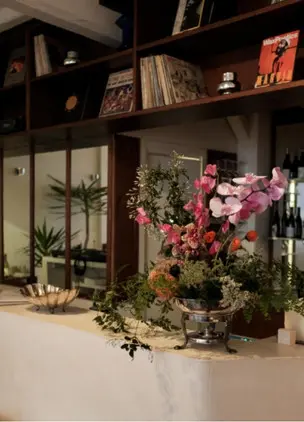
At 33 Giri, records spin behind the bar while natural wines and small plates make their way across the room. Part listening bar, part restaurant, it attracts a crowd drawn as much by the music as the food. The atmosphere stays relaxed, the soundtrack remains thoughtful and the evenings have a habit of lasting longer than planned.
Both can make a memorable base for exploring the city, but they approach Rome from different directions. Romantic hotels lean into the qualities that have captivated travellers for generations, history, atmosphere and a sense of occasion. Cool hotels are often driven by a stronger point of view, whether through design, art, food or the personality behind the hotel itself. There is sometimes overlap between the two, but the emphasis is different. If you are looking for a hotel that helps you see Rome differently, start here. If you are drawn to the version of Rome you have always imagined, the romantic hotels may be the better fit.
Romantic Hotels in Rome
Hotels that could only exist in Rome
Centro Storico
The Rome people imagine before they arrive
Hotels with Pools in Rome
A place to reset between long Roman days
Our perspective
We use cookies to improve your experience and understand how the site is used. You can accept or manage your preferences at any time.