Hotels in Barrio de las Letras Madrid

A more thoughtful side of Madrid, shaped by culture and daily life.

Barrio de las Letras offers a different perspective on Madrid. Around Calle Huertas, Plaza de Santa Ana and the streets leading towards the Prado, bookshops, cafés, wine bars and cultural institutions create a neighbourhood that feels lived in rather than arranged. Much of the appeal lies in the details. A table that fills at the same time every afternoon, a gallery visited on impulse, an evening spent moving between a small wine bar and a nearby plaza. This is a side of Madrid shaped more by culture than spectacle, where the city reveals itself gradually rather than all at once. If you are looking for hotels in Barrio de las Letras Madrid, these are the stays we would choose first.

Best For:

• Culture-focused city breaks
• Museums, bookshops and café culture
• Walkable stays in central Madrid
Travellers who prefer neighbourhoods over landmarks

Skip if:

• You want Madrid’s busiest bars on your doorstep
• Rooftop pools are a priority
• You prefer trend-led neighbourhoods
• Most of your time will be spent outside the city centre

Nearby Alternative:

Malasaña
Creative energy and a more contemporary side of Madrid

Salamanca
Elegant boulevards and a calmer pace

Hotels Near the Prado Madrid
The city’s great museums within walking distance

Why stay in Barrio de las Letras

Barrio de las Letras sits at the centre of much of what makes Madrid rewarding to explore on foot. The Prado, Thyssen-Bornemisza and Reina Sofía are all nearby, while cafés, wine bars and small plazas give the neighbourhood a rhythm that extends well beyond the museum district. It feels quieter than Gran Vía and more established than Malasaña, offering a version of Madrid built around culture, conversation and everyday life. For travellers who enjoy discovering a city gradually, few neighbourhoods make a better base.

The Best Hotels in Barrio de las Letras Madrid

These are the hotels in Barrio de las Letras we would book first, each chosen for how naturally they belong to this quieter, more cultural side of Madrid.

CASA DE LAS ARTES

A cultural hotel built around literature, cinema, music and the creative life of Barrio de las Letras.

Why stay here

Casa de las Artes feels unusually connected to its surroundings. Set inside a restored 1913 building, the hotel takes inspiration from the seven arts, with a cinema room, library, live music programming and public spaces designed to encourage people to linger rather than pass through. The connection to the neighbourhood runs deeper than the concept. The hotel sits beside the building where the first edition of Don Quixote was printed and within easy walking distance of the Prado, Thyssen and Reina Sofía. One of the few hotels in Madrid that genuinely reflects the cultural identity of the area around it.

Best For

Culture-focused stays and travellers who want a hotel that takes its neighbourhood seriously.

ONLY YOU HOTEL ATOCHA

A well-connected Madrid hotel linking Barrio de las Letras, Retiro Park and the museum district.

Why stay here

Only YOU Atocha occupies one of the most useful positions in Madrid. Facing Atocha station and a short walk from Retiro Park, it sits between the museum district and the neighbourhood life of Barrio de las Letras. The building dates from 1886, with interiors arranged around a striking central courtyard that keeps the hotel feeling bright and social throughout the day. The Prado, Reina Sofía and Thyssen-Bornemisza are all within walking distance, while the rooftop restaurant looks out across the city. A larger hotel that makes exploring Madrid remarkably easy.

Best For

Museum-focused city breaks and travellers who want Madrid’s cultural highlights within walking distance.

VINCCI SOHO

Five historic buildings brought together in the heart of Barrio de las Letras.

Why stay here

Vincci Soho works because it puts the neighbourhood first. Spread across five heritage buildings on Calle del Prado, the hotel sits within easy walking distance of Plaza de Santa Ana, Calle Huertas and Madrid’s major museums. The interiors are contemporary without demanding too much attention, allowing the location to remain the main attraction. Rooms vary in size thanks to the original architecture, while the courtyard and terrace provide welcome breathing space in the centre of the city. Step outside and much of what makes Barrio de las Letras appealing begins immediately.

Best For

First-time Madrid visits and travellers who want Barrio de las Letras on their doorstep.

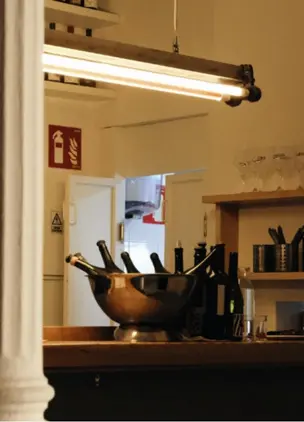
Interior of Corchito wine bar in Barrio de las Letras Madrid

Where to DRINK Nearby

CORCHITO

Corchito carries the energy of a neighbourhood wine bar at full flow. The room is small, the tables close together and the atmosphere builds naturally as the evening unfolds. The wine list moves between Spanish, French and Italian producers, while simple plates keep the focus on the bottles and the conversation around them. Lively without feeling forced, and the kind of place people return to for exactly that reason.

Barrio de las Letras or Malasaña?

Barrio de las Letras and Malasaña both appeal to travellers looking beyond Madrid’s major attractions, but they offer very different experiences. Barrio de las Letras moves at a slower pace, shaped by museums, bookshops, cafés and streets that reward wandering without a plan. Malasaña feels younger and more energetic, with record shops, natural wine bars and a creative atmosphere that carries well into the evening. If you are drawn to culture, conversation and Madrid’s museum district, choose Barrio de las Letras. If you prefer a neighbourhood with more edge and a stronger nightlife scene, stay in Malasaña.

Stay Elsewhere in Madrid

Gran Vía (Centro)
Grand architecture, central access and Madrid at full volume

Malasaña
Creative energy and a more contemporary side of Madrid

Hotels Near the Prado Madrid
The city’s great museums within walking distance

Explore

Our perspective

Where you stay shapes how a place is experienced. Not through spectacle, but through atmosphere, detail, and the rhythm of daily life. Places that sit naturally within their surroundings, connected to food, people, and the way a day unfolds, where it feels easy to settle in and experience what is actually there.