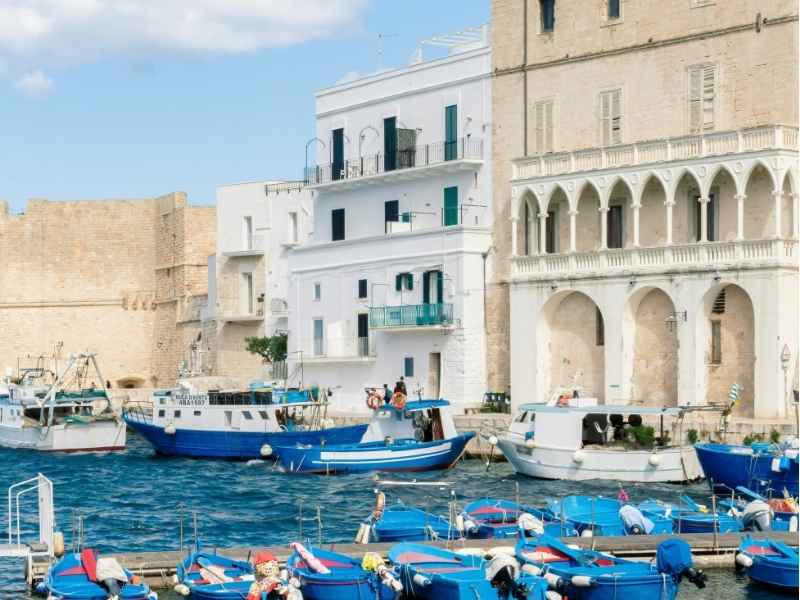
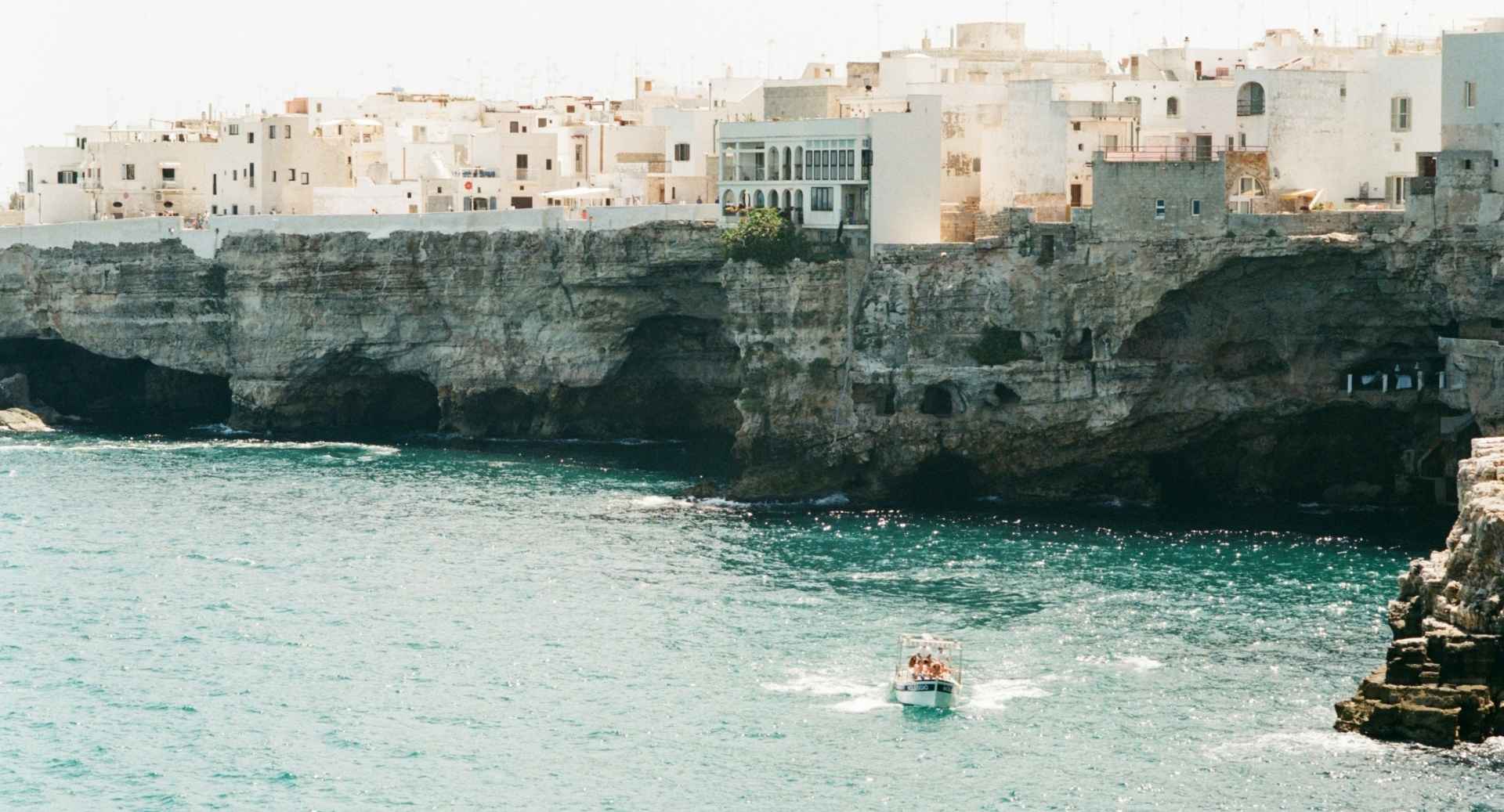
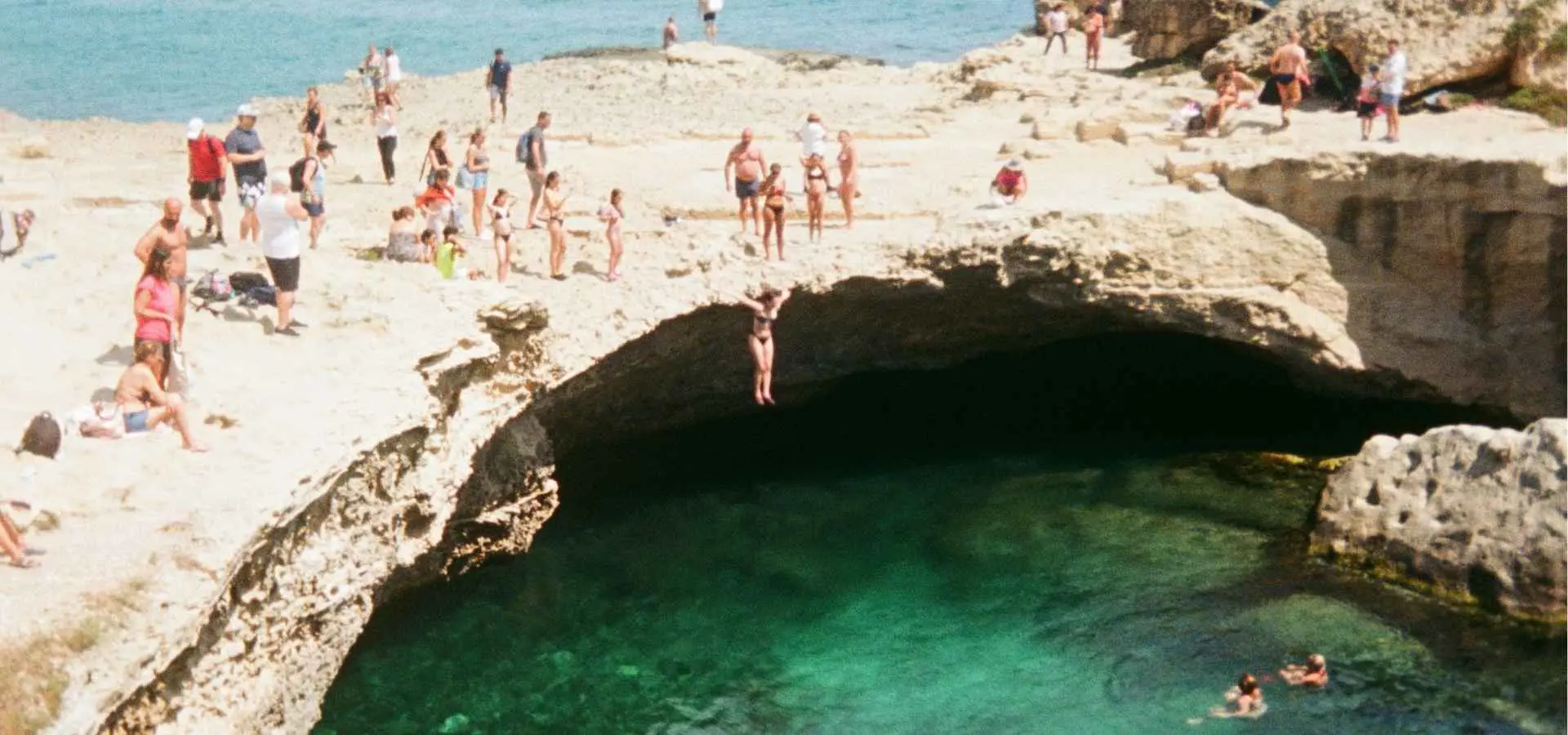
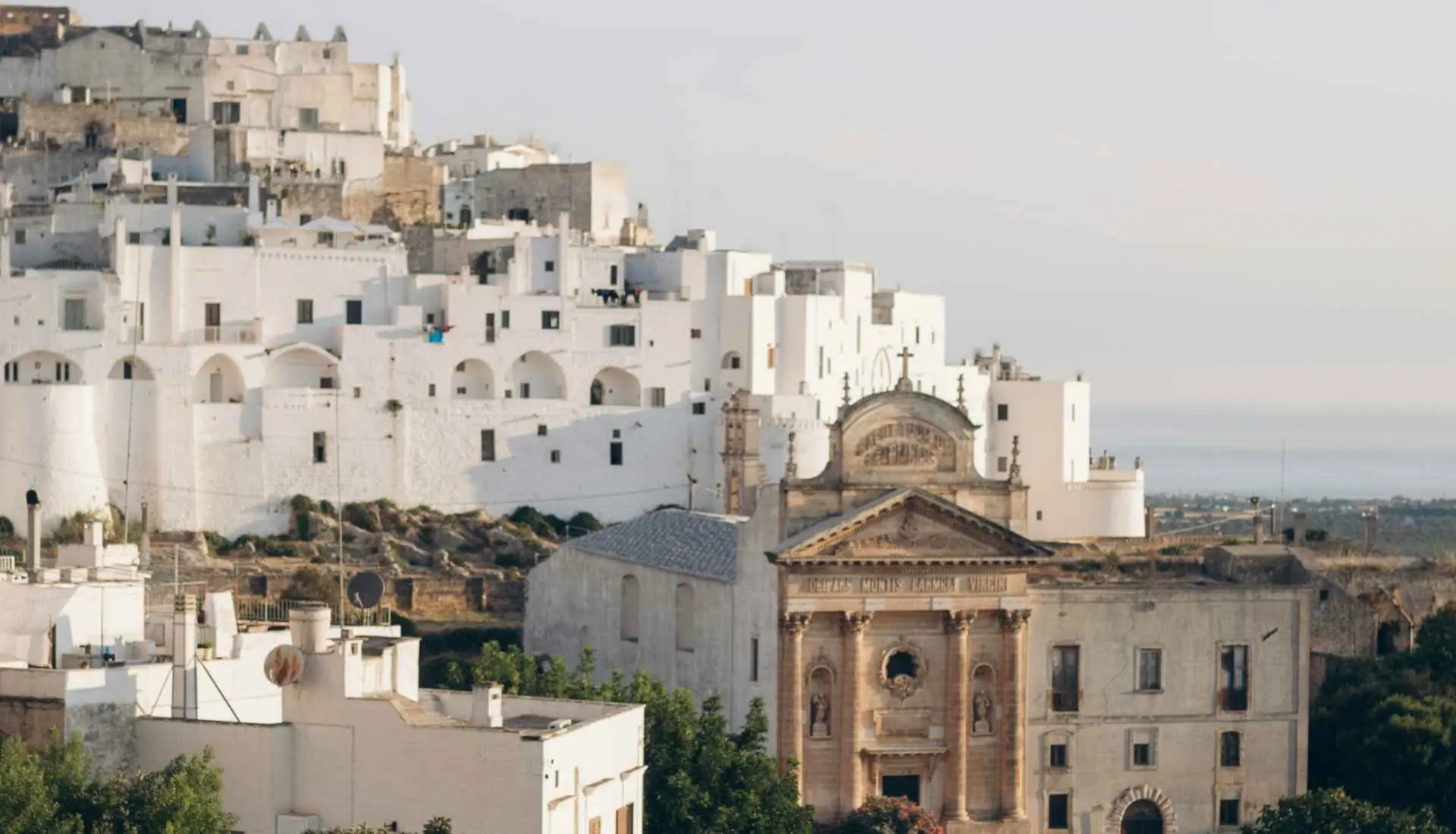
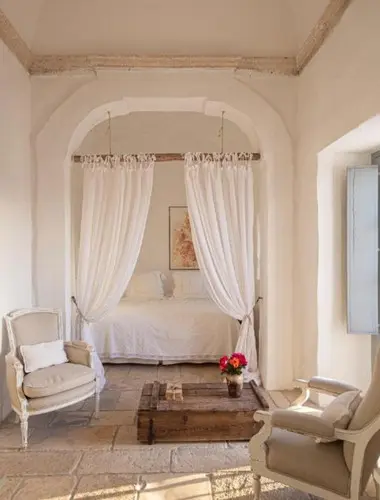
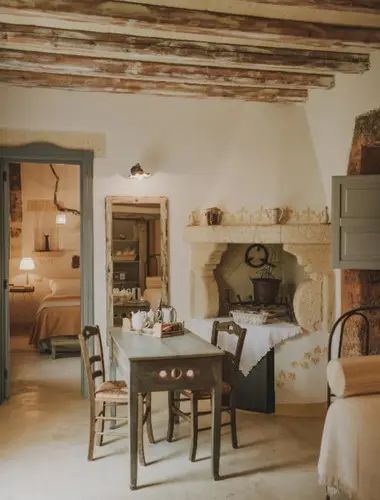
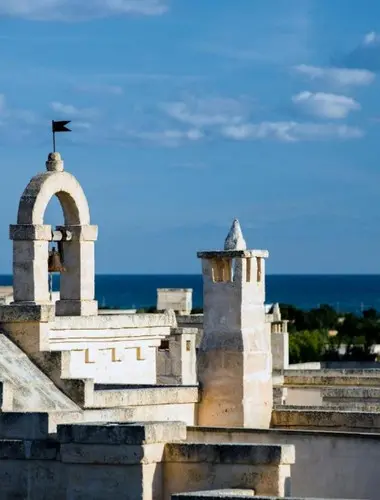
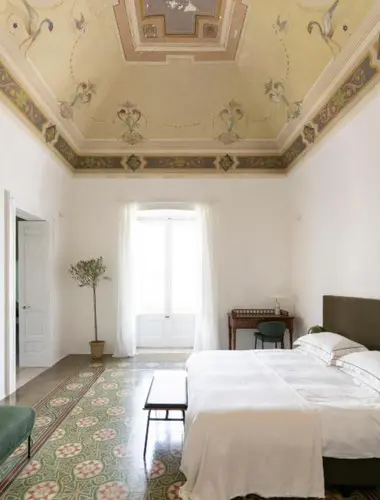
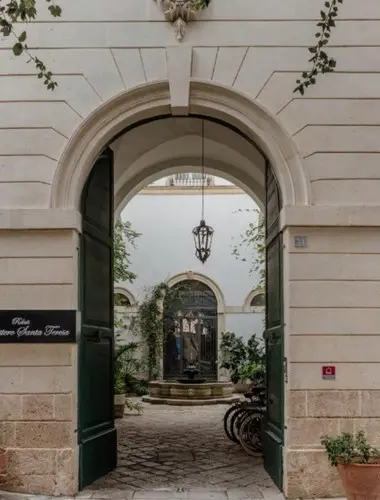
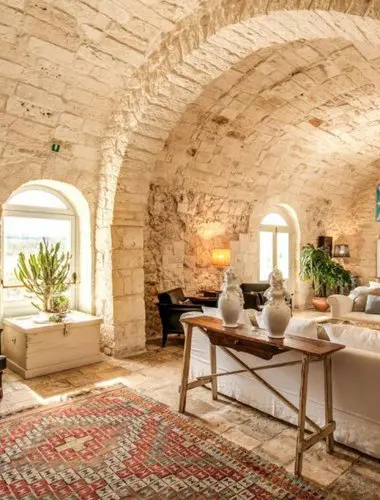
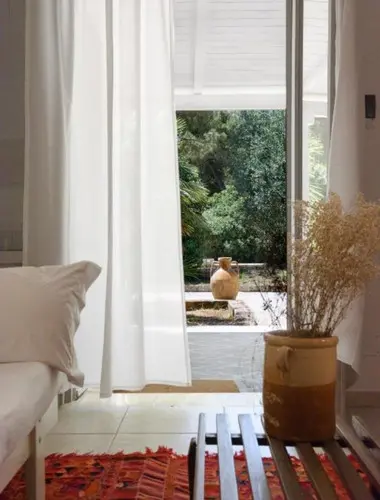
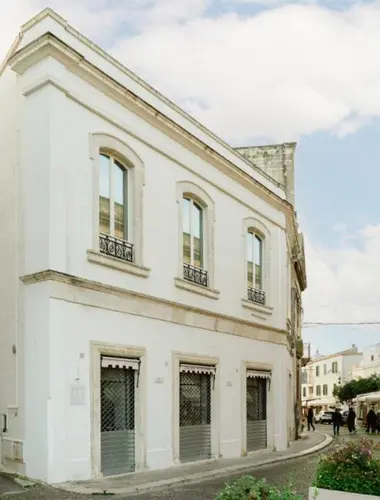
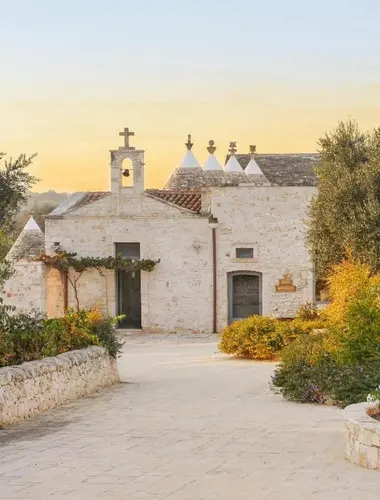
Puglia is read on the road between town and country. Polignano keeps the Adriatic close, though its strongest stays sit behind the cliffs among olive groves. Ostuni offers whitewashed streets after dark or masserie across the plain below. Salento needs more time: Lecce, Nardò and Manduria pull inland while two coasts compete for the day. A car is essential. Sleep in town for evenings on foot; choose a masseria when land and table should hold the trip together.

Cliff swims, working farms and an Adriatic coast best enjoyed from just behind it.

Baroque towns, Primitivo country and two very different seas at the end of Puglia.

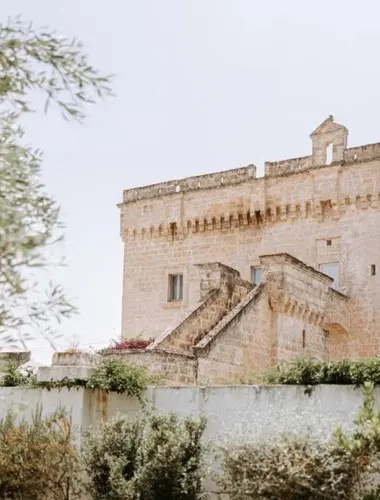
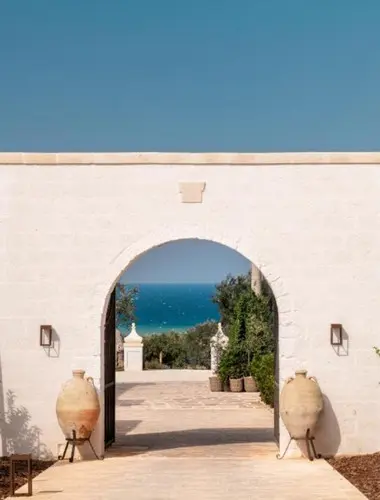
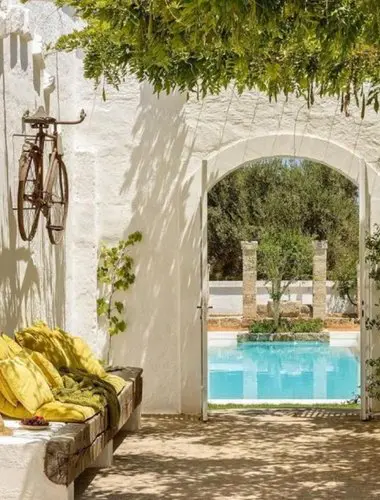
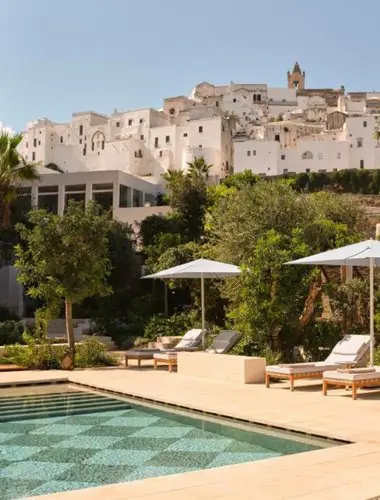
White walls, ancient olive trees and the Adriatic waiting at the bottom of the hill.
Ostuni is the strongest all-round base. It places the Valle d’Itria, Adriatic coast and some of the region’s best masserie within easy driving distance, while the old town still handles dinner and drinks on foot. Choose Polignano a Mare when swimming and the coast should come first. Go further south into Salento when you have more time, want both seas and do not mind taking the long road to lunch.
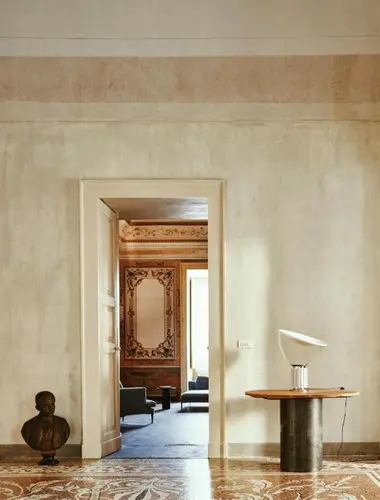
Stay in town if you want coffee, dinner and an evening drink without returning to the car. Choose the countryside when the hotel is meant to occupy part of the day, with olive groves, a pool and a kitchen worth coming back for. Puglia suits a split stay particularly well. Begin with a townhouse or palazzo, then move to one of the best masseria hotels in Puglia and let the pace drop properly.
A masseria describes the place: a traditional southern Italian farm estate built around courtyards, agricultural buildings and thick stone walls. Agriturismo describes how the property operates, with farming or food production still connected to the stay. A masseria can now be anything from a simple farmhouse to a polished resort. The best agriturismo in Puglia keeps the land productive and makes what is grown there part of the experience.
For the version of Puglia covered in this guide, usually yes. Polignano, Monopoli and Lecce can support a short car-free stay, but most masserie, quieter beaches and inland towns are difficult to connect without driving. Roads are generally manageable, although rural lanes become dark and poorly marked after sunset. Choose one compact area each day, avoid building evenings around long transfers and check the parking arrangement before booking any old-town address.
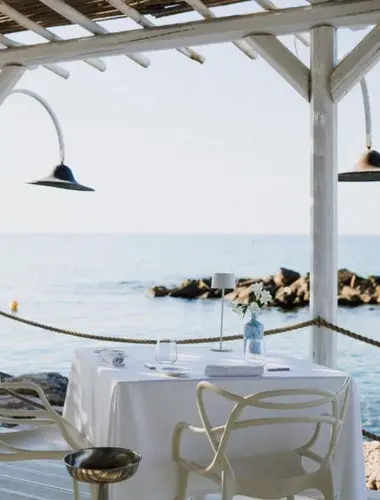
Salento’s Ionian coast is the better choice for long sand, warmer water and easy swimming. The Adriatic feels rougher and more varied, moving between Polignano’s cliff coves, rocky swimming places near Savelletri and beaches south of Monopoli. It depends on whether you want the beach to be the destination or part of a wider day. Our Beach Hotels in Puglia edit includes both direct waterfront stays and masserie set just behind the coast.
Five days is enough for one part of the region. Seven to ten gives you room for two bases and a better understanding of how quickly Puglia changes as you travel south. Combine Ostuni or Polignano with Salento rather than attempting the entire region from one hotel. With only three or four nights, choose one base and resist turning the trip into a sequence of white towns, parking searches and rushed meals.
Late May, June, September and early October bring warm days without the full pressure of high summer. The sea is usually more inviting in September, while spring gives the countryside more colour. July and August deliver heat, crowded beaches and higher hotel rates, particularly around Polignano and the better-known coast. They still work if swimming is the entire point, but book restaurants, beach clubs and the hotel you actually want well ahead.
For collaborations and enquiries
We use cookies to improve your experience and understand how the site is used. You can accept or manage your preferences at any time.