Boutique Hotels in Madrid

Madrid’s best boutique hotels rarely rely on size alone. What matters more is authorship: a hotel shaped by a particular building, neighbourhood or creative point of view rather than a formula repeated from elsewhere. In Malasaña that might mean vintage furniture and a bar used by the neighbourhood. On Gran Vía, it can mean taking a grand historic address and giving it an entirely new interior life. Salamanca lends itself to something quieter, built around proportion, gardens and long lunches. If you are looking for boutique hotels in Madrid, these are the stays we would choose first for individuality, character and the way they interpret the city around them.

madrid

best for

• Hotels with individual character
• Design, art and original buildings
• Neighbourhood-led city breaks
• Travellers who notice the details

skip if

• Large luxury hotels suit you better
• Extensive facilities matter most
• Predictable rooms feel reassuring
• The hotel is simply somewhere to sleep

Why Book a Boutique Hotel in Madrid?

Madrid gives smaller and more individually run hotels plenty to work with. Nineteenth-century mansions in Salamanca, early twentieth-century buildings around Gran Vía and the tighter streets of Malasaña each demand a different response. The strongest hotels let those conditions shape the stay rather than imposing the same design language everywhere. They also tend to have a life beyond the bedroom: a bar that gathers people after dark, a garden used for long lunches or artwork that connects the hotel to the city’s creative scene. Boutique hotels make sense here because Madrid rewards places with personality, particularly once the day begins to run into the evening.

Hotels

Hotel Montera Madrid

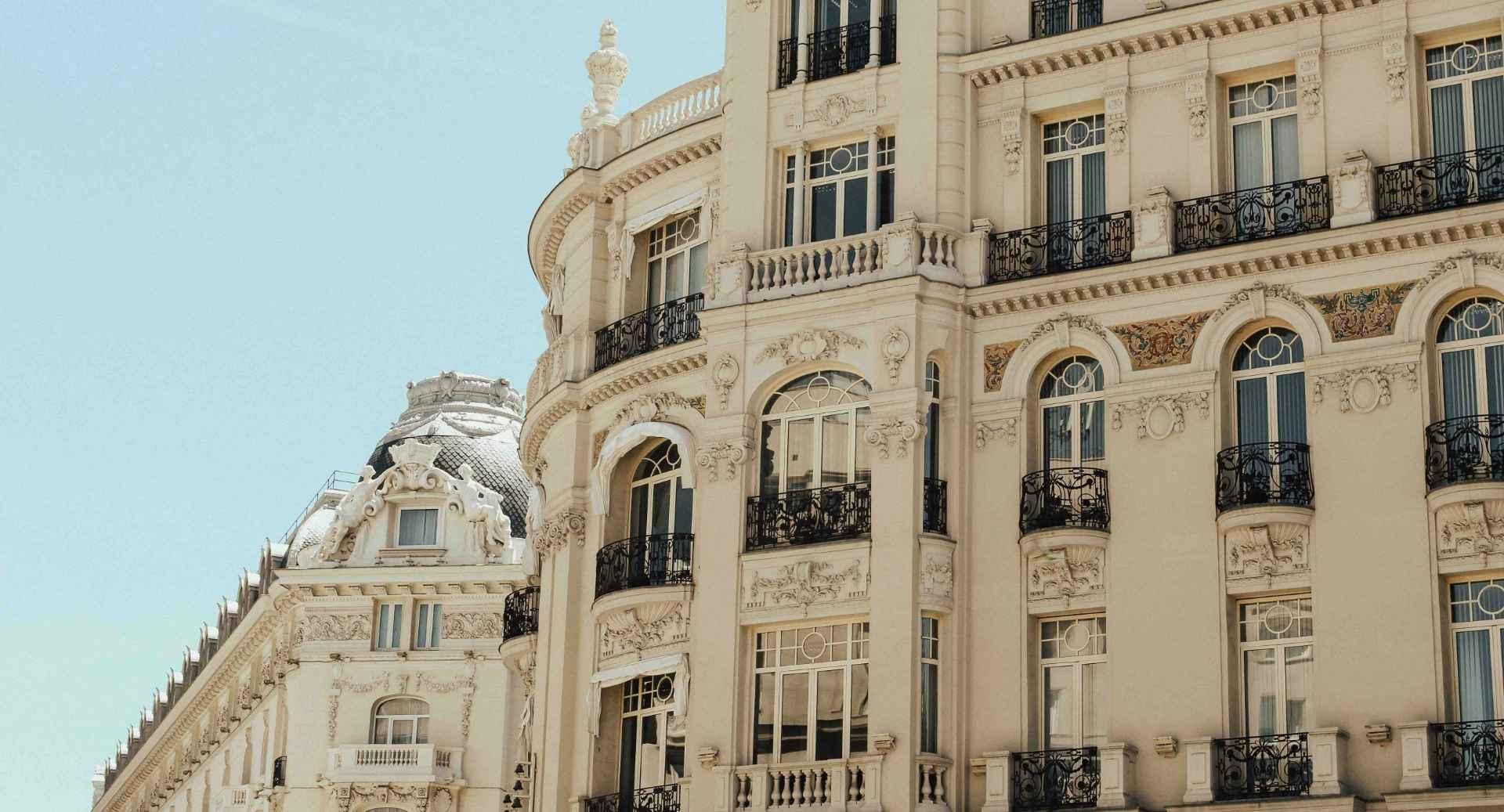
Gran Vía seen from above, with a ninth-floor arrival and a rooftop that changes the scale of central Madrid.

Why stay here

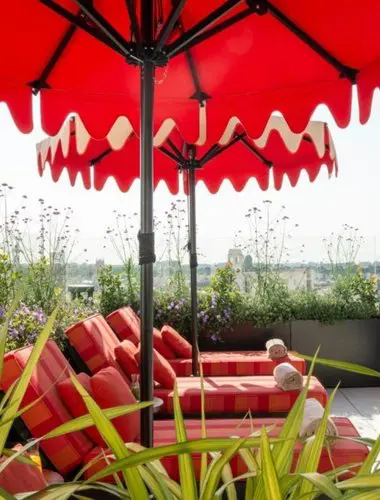
Hotel Montera makes a useful decision before guests even reach their room: reception is placed on the ninth floor. Arriving above the surrounding roofs shifts attention away from the pavement and towards the city as a whole. Lázaro Rosa-Violán brings Castilian references into the interiors through material, colour and pattern without turning them into an obvious theme, while the neoclassical structure still gives the building order. The rooftop pool and terrace continue the upward emphasis. Gran Vía remains immediately below, but the hotel is most convincing when experienced from some distance above it.

Best for

Rooftop views, central weekends and guests who like Madrid better from above.
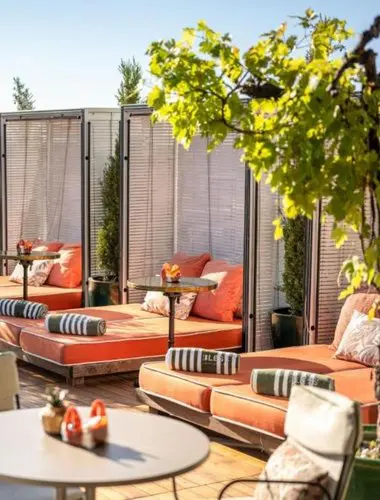
Rooftop terrace with city views at Hotel Montera Madrid on Gran Vía
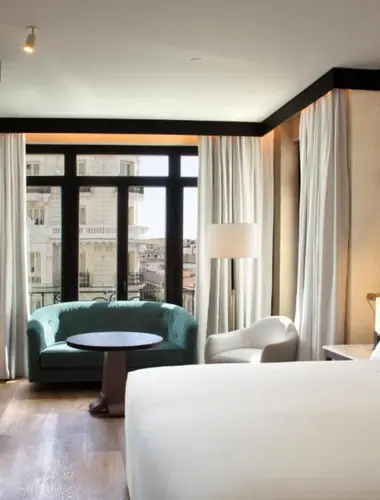
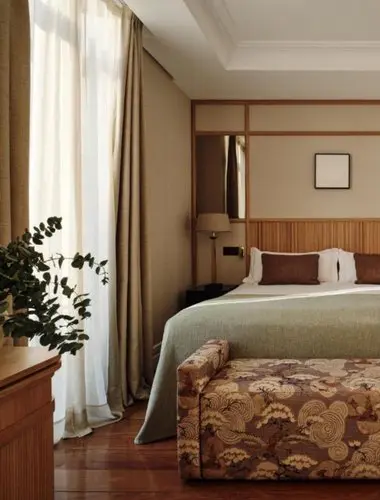
Guest room at Hotel Montera Madrid near Gran Vía Madrid

Brach Madrid

Philippe Starck turns a 1920s Gran Vía building into a layered world of objects, texture and imagined history.

Why stay here

Brach Madrid begins with storytelling, but the materials give that story weight. Mahogany, woven leather, terracotta and the building’s original wrought-iron staircase create rooms that feel substantial rather than theatrical. Philippe Starck imagined an address shaped by artists, travellers and Madrid’s old café culture, then allowed traces of that fictional life to accumulate through furniture and objects. The public spaces carry most of the density, while bedrooms become noticeably calmer upstairs. Balconies return Gran Vía to the experience immediately. It is highly designed, but not in a way that reveals itself all at once.

Best for

Gran Vía stays, layered interiors and guests who enjoy hotels with a little theatre.
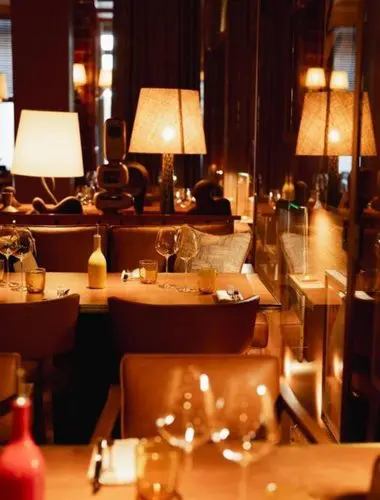
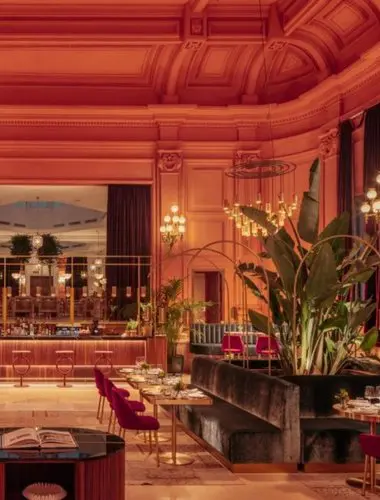
Restaurant interior at Brach Madrid on Gran Vía Madrid
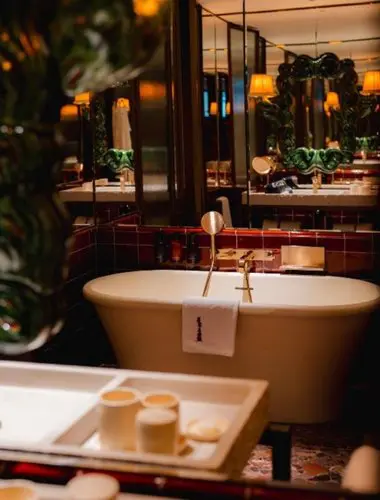
Luxury bathroom at Brach Madrid, Gran Vía Madrid

Hôtel du Temps Madrid

Vintage furniture, collected objects and a Malasaña address that feels comfortably unfinished.

Why stay here

Hôtel du Temps takes much of its character from things that already had another life. Furniture, lighting, books and objects were sourced second-hand across Madrid, giving the rooms the accumulation of somewhere that evolved rather than arrived fully specified. Warm colour and individual details continue upstairs, while the bar gives the ground floor enough movement to feel connected to Malasaña rather than sealed off from it. Live music and guest events occasionally push that relationship further. The appeal is not polish. It is the sense that the hotel belongs naturally among the record shops, cafés and late-night streets outside.

Best for

Malasaña weekends, live music and guests who prefer collected interiors to polished design.
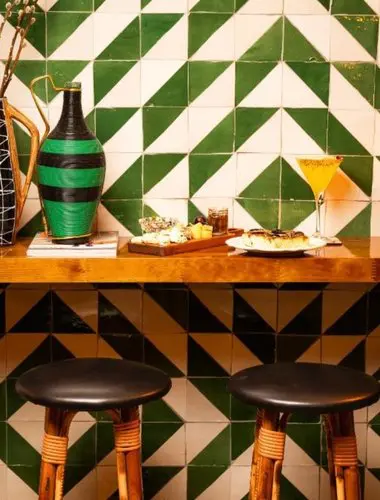
Vintage-inspired bar area at Hôtel du Temps, one of the cool hotels in Madrid
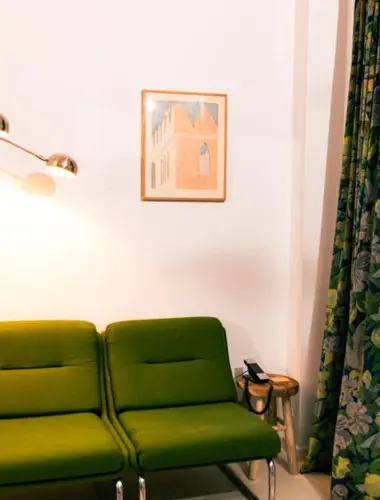
Colourful guest room at Hôtel du Temps in Malasaña Madrid

Casa de las Artes

Literature, cinema and music give this Barrio de las Letras hotel more substance than a decorative theme.

Why stay here

Casa de las Artes uses the cultural history around Calle Atocha as working material. Literature appears through its connection to the nearby printing history of Don Quixote, while a cinema, library, exhibitions and live programming allow the idea to continue beyond framed references on a wall. The scale is larger than a conventional boutique hotel, but the experience remains unusually specific. Historic architectural details, stained glass and darker timber give the public rooms weight, while the neighbourhood supplies the wider context. The Prado, Reina Sofía and Thyssen are all close, yet the hotel makes a convincing case for culture continuing after you return.

Best for

Museum weekends, books and guests who want culture woven through the hotel.
Guest room at Casa de las Artes hotel in Barrio de las Letras Madrid
Restaurant and lounge at Casa de las Artes in Barrio de las Letras Madrid

Bless Hotel Madrid

A more expressive Salamanca stay where rooftop life and richer interiors loosen the neighbourhood’s formality.

Why stay here

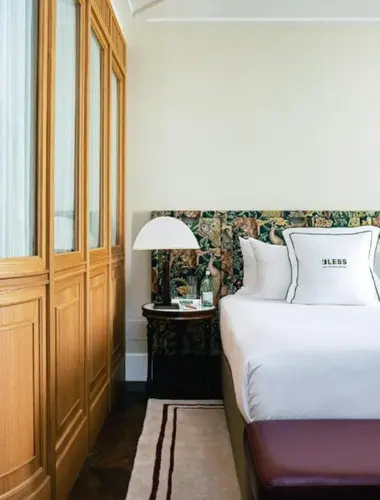
Bless takes Salamanca’s symmetry and elegance and pushes against them slightly. Lázaro Rosa-Violán uses marble, brass, velvet and curved furniture to bring more colour and movement into the interiors, while the rooftop adds a social layer rarely associated with the neighbourhood. The pool and terrace become particularly persuasive in warmer months, offering somewhere to remain through the late afternoon rather than immediately heading back onto the street. With more than a hundred rooms, intimacy is not its strongest argument. What earns it a place here is the clarity of the interior world and the way it brings a little more energy into an otherwise composed part of Madrid.

Best for

Rooftop afternoons, Salamanca dinners and guests who want design with more social energy.
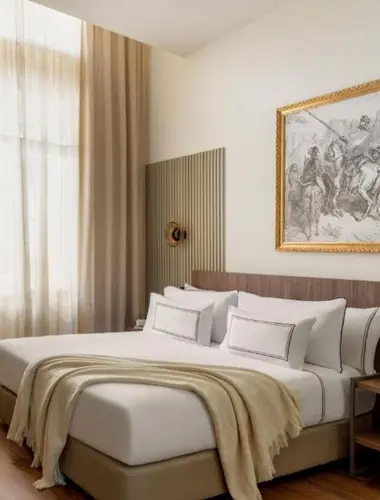
Guest room at Bless Hotel Madrid in Salamanca Madrid
hotels-in-salamanca-madrid-bless-hotel-madrid-02

Hotel Único Madrid

A nineteenth-century Salamanca mansion where a private garden sets the pace of the stay.

Why stay here

Único works because very little competes with the building itself. High ceilings, tall windows and the proportions of the former mansion give the rooms their structure, while softer contemporary furniture keeps the atmosphere residential rather than formal. The private garden changes the experience most. Breakfast, an afternoon pause or a drink before dinner can happen away from the street, giving Salamanca’s already measured pace another degree of separation. Claudio Coello and Jorge Juan place some of the neighbourhood’s strongest restaurants nearby. For travellers who prefer quiet confidence to a busier hotel scene, the restraint feels particularly well judged.

Best for

Literature, cinema and music give this Barrio de las Letras hotel more substance than a decorative theme.
Elegant guest room at Hotel Único in Salamanca Madrid
Restaurant and lounge at Hotel Único in Salamanca Madrid
dishes and wine at Olea restaurant in Salamanca Madrid

Where to Eat Nearby

Olea

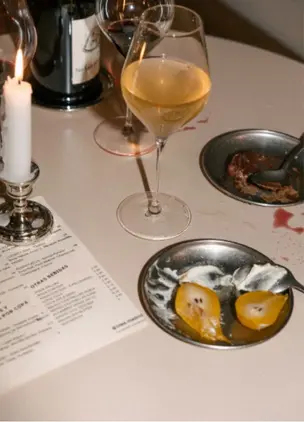
Olea sits slightly outside the louder parts of the city, which is part of the appeal. The cooking is modern Mediterranean, lighter, more composed, with a focus on balance rather than excess. The space itself is calm, almost understated, making it a good counterpoint to Madrid’s more energetic dining rooms.

Boutique Hotels or Cool Hotels in Madrid?

Boutique hotels are defined here by individuality: a particular building, interior author or way of responding to the neighbourhood. Cool hotels make a stronger cultural statement. Art, music, architecture or a singular concept may become more important than intimacy or scale. Madrid has plenty of overlap, particularly at Hôtel du Temps and Brach. Choose boutique when detail, atmosphere and the specificity of the stay matter most. Start with the cool-hotels edit when you want the hotel to make a more assertive statement.