Layered streets, galleries, late nights and the most social side of Paris.
Le Marais does not try to be one thing. The 17th century mansions became concept stores and the concept stores became institutions. The Jewish quarter, the gay bars, the fashion crowd, the Sunday market at the Marché des Enfants Rouges, all of it running on the same streets without any of it cancelling the other out. Few parts of Paris feel this layered or this alive. If you are looking for the best hotels in Le Marais Paris, these are the stays that sit most naturally inside it.
Canal Saint-Martin
Younger energy and a more local pace
Pigalle
Nightlife, wine bars and creative energy
Cool Hotels Paris
Design-led stays with a stronger point of view
Le Marais works because it refuses to settle into one identity. Former mansions hold concept stores, galleries sit beside old cafés, and the Jewish quarter, fashion crowd and late-night bars all share the same streets without feeling arranged. The neighbourhood is dense, social and constantly in motion, but the history never disappears beneath the surface. It is one of the few parts of Paris where old and new sit so closely together. For travellers who want energy, culture and a strong sense of place, Le Marais remains one of the city’s most compelling bases.
These are the Le Marais hotels we would book first, each chosen for how naturally they sit inside one of Paris’s most singular neighbourhoods.
A former convent on rue Commines, named after a jazz record, with a coffee shop that belongs to the neighbourhood as much as the hotel.
The building dates from the 18th century and the original beams and wooden staircase are still doing their work. Dorothée Delaye’s interiors dress them in velvet, blown glass, marble and ceramic in saffron, terracotta and almond green, warm without being loud. The coffee shop on the ground floor fills through the day with locals, remote workers and people passing between galleries, which keeps the whole place feeling connected to the Haut-Marais rather than sealed off from it. 31 rooms, each compact and carefully considered. The kind of address that takes a moment to find and then feels obvious once you have.
Design-conscious stays and travellers who want the Haut-Marais at neighbourhood level.
The building that started life as Sinner, now reimagined by Tristan Auer into 43 rooms of gothic warmth and considered excess.
Tristan Auer reimagined the building through the eyes of a fictional globetrotting aesthete, a character whose collected objects, souvenirs and art fill all 43 rooms with a gothic warmth that feels inhabited rather than designed. Grand arches, stained glass, darker tones and intimate corners give the building its weight. Temple & Chapon seats 100 beneath a cathedral glass ceiling with Chef Mélanie Serre running a brasserie built around the classic New York chop house. The American Bar runs cocktails late. The Susanne Kaufmann spa has a Roman bath below. One of the more complete hotels to open in Paris in recent years.
Design-led stays, later evenings and travellers who want everything under one roof in the Marais.
Nineteen rooms on rue des Archives with no check-in desk, because the point is to feel like a guest rather than a customer.
Philippe Jégou and Aurore Vachette de Lesquen designed the hotel as a Parisian family house rather than a conventional hotel, and the absence of a reception desk is the clearest signal of that. All staff act as concierges. The rough stone walls and original beams of the 18th century building stay visible throughout, alongside natural materials, linen, raw wood and a library that gives the ground floor a domestic warmth. Nineteen rooms, each different. Homemade breakfast is served until noon. The Marché des Enfants Rouges is a short walk away and the building feels like it belongs to the same unhurried rhythm.
Travellers who want a Marais address that feels like staying in someone’s well-considered home.
A hotel on rue Bailly where every room is named after a woman who changed something.
Olympe de Gouges arrived in Paris and stayed steps away from this building before writing the Declaration of the Rights of Woman in 1791. That history gave the hotel its name and its rooms, each one dedicated to a woman who changed something. Colette, Simone Veil, Marie Curie, Coco Chanel, Rosa Parks, Simone de Beauvoir. The George Sand suite sits on the sixth floor, accessible only by a 15-step staircase between the fifth and sixth floors. The decor shifts gently with the seasons. The bar stays open until midnight. The sister property, La Chambre du Marais, is nearby.
Travellers who want a Marais stay with a genuine story behind every room.
A five-star hotel on rue de Picardie, seven years in the making, built entirely around Marcel Proust’s world.
Jacques Garcia spent seven years designing the interior around the Belle Époque salons Proust described in Remembrance of Things Past. Cordoue leather wall coverings from House Fey, carved woodwork, period tapestries, antique furniture selected by French craftsmen and lampshades inscribed with passages from the novel run through all 23 rooms. The library has a golden sun mural above it. The basement spa is the only La Mer spa in France, its hand-laid zelliges inspired by Moroccan hammams, with a 10-metre heated pool, sauna and steam room. Part of the Maisons Particulières Collection alongside Maison Souquet in Montmartre.
Literary stays, design-conscious weekends and travellers who want a spa that earns its five stars.
A hotel and confectionery on rue de Saintonge, where the candy jars feel as considered as the rooms.
Maison Saintonge evokes the family residences of southwestern France, specifically the Saintonge region of Charente, and brings that unhurried provincial spirit into the middle of the Marais. Stone floors, exposed beams and antique furniture sourced from across France give the 22 rooms a warmth that sits at odds with the neighbourhood outside in the best possible way. The confectionery counter on the ground floor stocks gift baskets, glass candy jars and delicacies from French producers. Breakfast is locavore: organic bread from the local bakery, Lomi coffee, cold meat from Gilles Verlot, cheeses and crepes made in house.
Travellers who want the Marais with a quieter, more considered version of France behind it.
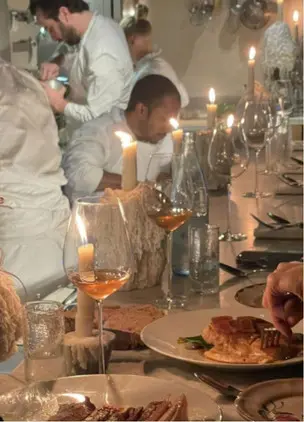
A small, energetic dining room where the kitchen works with real freedom. The menu shifts constantly, guided by the seasons and whatever feels right in the moment. There’s a looseness to the room, but it never feels unconsidered, with good wine moving easily between tables and a crowd that settles in quickly.
Both attract the same kind of traveller but offer different versions of Paris. Le Marais is denser and more layered, the gay bars, the concept stores and the serious restaurants all running on the same streets without feeling arranged. Canal Saint-Martin moves at a slower pace, younger and more residential, canal-side cafés and a neighbourhood that still feels like it belongs to the people who live there. If you want Paris at its most social and alive, stay in Le Marais. If you want a quieter, cooler corner of the city, go north.
Canal Saint-Martin
Younger energy, canal-side cafés and a more local pace
Pigalle
Nightlife, natural wine bars and the creative side of the Right Bank
Cool Hotels Paris
Design-led stays with a stronger point of view
Our perspective
For collaborations and enquiries
We use cookies to improve your experience and understand how the site is used. You can accept or manage your preferences at any time.