Boutique Hotels in London

London gives boutique hotels unusually good raw material. Georgian townhouses, Victorian railway hotels, old banks, former courts and grand civic buildings all create very different conditions for a stay, often within a few miles of one another. The strongest hotels work with that inheritance rather than smoothing it into the same version of luxury. Some stay small and residential, others stretch the boutique definition through scale but retain enough authorship to feel distinct. If you are looking for boutique hotels in London, these are the places we would choose first for character, design and a clear relationship with the neighbourhood outside.

Best Hotels In London

best for

• Historic buildings with individual character
• Design-led city breaks
• Neighbourhood-focused weekends
• Travellers who notice the details

skip if

• Large chain hotels suit you better
• Extensive facilities matter most
• Predictable rooms feel reassuring
• The hotel is only somewhere to sleep

Why Book a Boutique Hotel in London?

London’s boutique hotels work particularly well because the city rarely offers one architectural language for long. Georgian townhouses sit beside Victorian landmarks, old banks become social hotels and former civic buildings carry entirely new uses without losing their original proportions. Smaller properties can preserve those irregularities more easily, while larger conversions sometimes earn their place through the strength of the building itself. The best also have a life beyond the bedroom: a neighbourhood restaurant downstairs, a bar used by locals or a lobby that stays active long after check-in. Boutique hotels make sense here because London rewards buildings with history and hotels confident enough not to smooth it away.

Hotels

Kimpton Fitzroy London

A terracotta landmark on Russell Square where Victorian scale and restored detail remain impossible to ignore.

Why stay here

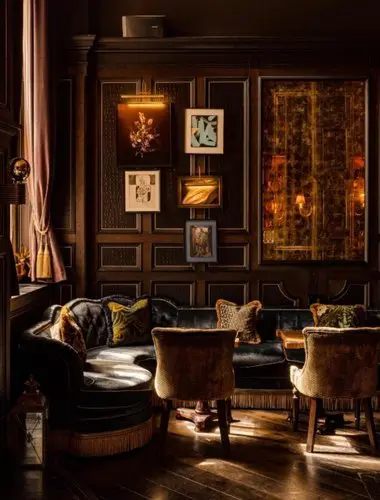
Kimpton Fitzroy is much larger than a typical boutique hotel, but the former Hotel Russell has enough architectural identity to earn its place. Charles Fitzroy Doll’s 1900 building still carries its original Zodiac mosaic, marble staircase and elaborate public rooms, with the restoration preserving rather than simplifying that excess. Fitz’s Bar takes the mood somewhere darker through velvet, fireplaces and low light, while the Palm Court holds onto the building’s grander register during the day. Outside, Russell Square and Bloomsbury soften the pace, giving the hotel a calmer setting than its scale might suggest.

Best for

Bloomsbury weekends, architectural stays and guests who enjoy a little Victorian grandeur.
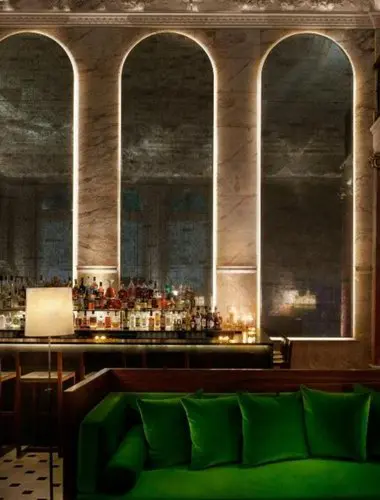
Fitz's Bar at Kimpton Fitzroy London with velvet sofas and dark wood panelling
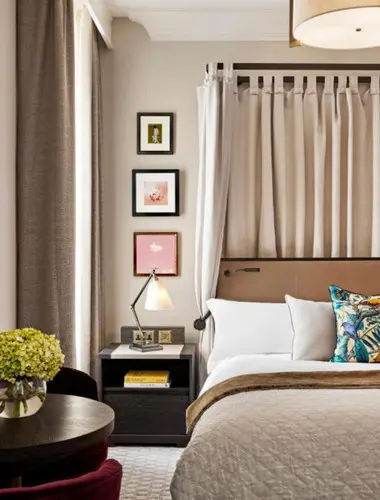
Guest room at Kimpton Fitzroy London with framed artwork and luxury bed

The Ned

A monumental former bank where marble columns, old counters and sheer scale still dictate the experience.

Why stay here

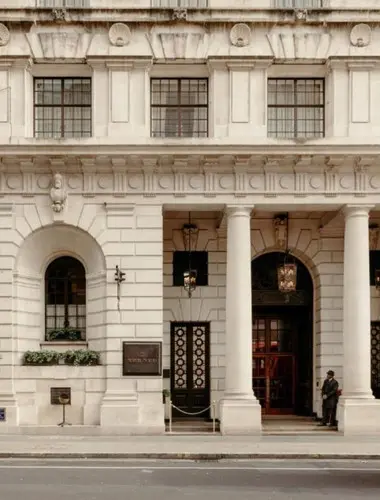
The Ned stretches the usual definition of boutique considerably, but the former Midland Bank gives it an identity few hotels could reproduce. Edwin Lutyens’ banking hall still dominates the ground floor, with verdite marble columns, walnut counters and the original architectural grid holding restaurants, bars and live music inside it. Upstairs, the rooms take a softer direction through darker timber, patterned fabrics and references to 1920s and 30s interiors. The City can empty quickly outside office hours, but the hotel generates enough life of its own that the neighbourhood’s silence becomes almost irrelevant.

Best for

Grand-scale design, longer weekends and guests who want the hotel to become part of the trip.
The Ned London exterior facade on Poultry in the City of London
spa-hotels-london-the-ned-03

Henrietta Hotel

Two Covent Garden townhouses where colour, food and a smaller scale soften one of London’s busiest neighbourhoods.

Why stay here

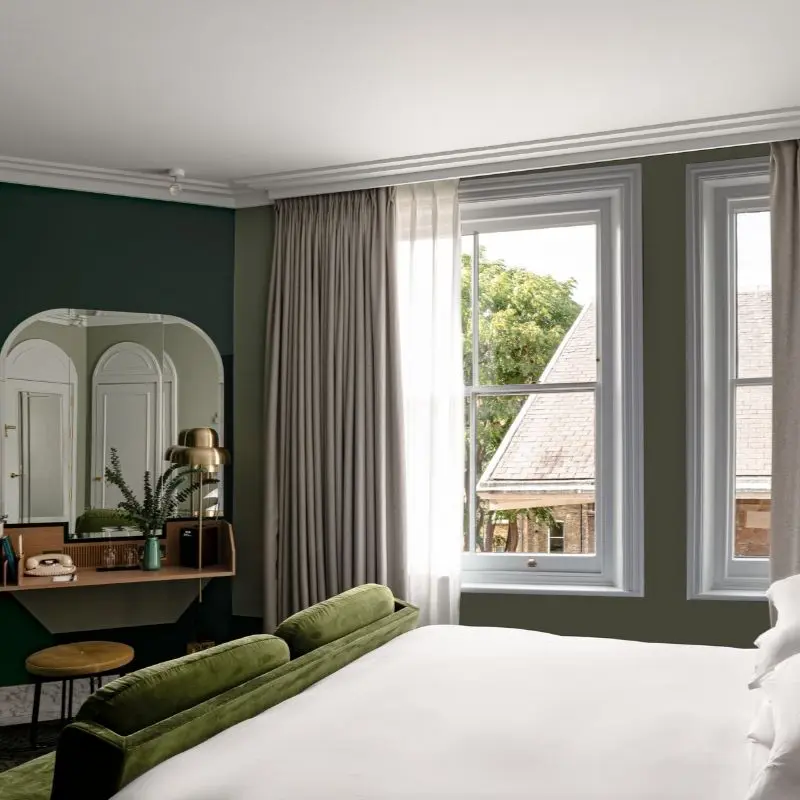
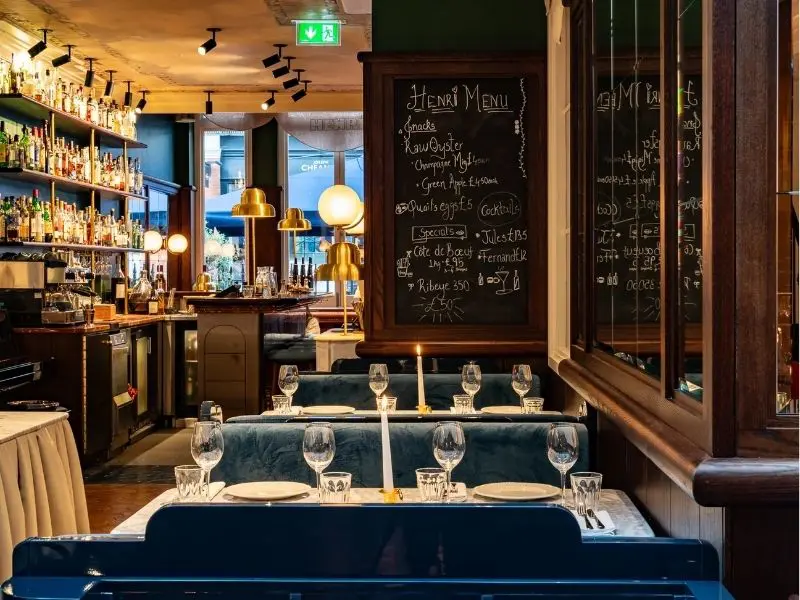
Henrietta Experimental keeps things intimate in a part of London that rarely does. Dorothée Meilichzon uses terracotta, patterned fabrics, rounded furniture and warmer colour to give the rooms personality without overwhelming the Georgian buildings. Downstairs, Henri gives the hotel a restaurant-led rhythm that begins at lunch and carries naturally into the evening. Some rooms at the rear look towards the garden of St Paul’s Church, creating a surprisingly quiet counterpoint to the Piazza only moments away. The scale matters here. Forty rooms are enough to keep the hotel social without losing the sense of being somewhere small.

Best for

Restaurant weekends, couples and guests who want Covent Garden at a more intimate scale.
Guest room at Henrietta Hotel London with green velvet Sofa and garden view
Henri restaurant at Henrietta Hotel Covent Garden with brass lighting and chalk menu board

NoMad London

A former magistrates’ court where institutional architecture has been turned into something warmer and more intimate.

Why stay here

NoMad occupies the former Bow Street Magistrates’ Court, and the building’s previous life remains visible beneath the hotel. Thick walls, high ceilings and long corridors give the architecture weight, while Roman and Williams soften it through walnut, veined marble, velvet and richly layered textiles. The original courtroom became the Magistrates’ Ballroom, and parts of the former police station were absorbed into the guest rooms. Downstairs, the glass-roofed atrium carries much of the day before Side Hustle takes things later underground. Covent Garden is immediately outside, but the building creates its own world once you step in.

Best for

Design-led weekends, long dinners and guests who want Covent Garden with real atmosphere.
Guest room at Nomad London with gallery wall and velvet chaise longue
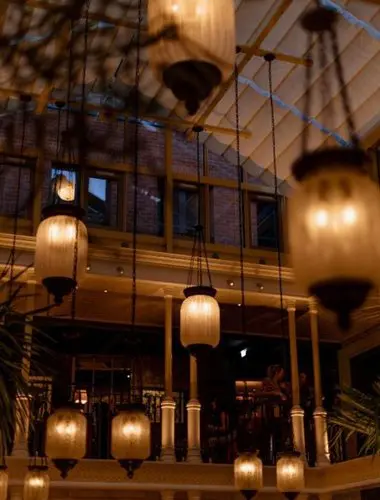
Nomad London restaurant atrium with Art Nouveau lanterns and glass ceiling

Grand Hotel Bellevue

A Victorian townhouse on a garden square that makes Paddington feel far more interesting than its railway-hotel reputation suggests.

Why stay here

Grand Hotel Bellevue sits only a few minutes from Paddington Station, but Norfolk Square changes the atmosphere quickly. Fabrizio Casiraghi designed the hotel as the imagined London home of a well-travelled aristocratic couple, which explains the mix of dark lacquered timber, ochre walls, Gothic details, jewel-toned carpets and unexpected textiles running through the rooms. Some are tiny and almost cabin-like; others look directly onto the garden square. Downstairs, the bar leans further into the building’s residential mood. It is a particularly good example of what London does well: taking a fairly conventional Victorian building and giving it enough personality to make you reconsider the neighbourhood around it.

Best for

Quieter weekends, design-conscious stays and travellers who want central London without its constant pace.
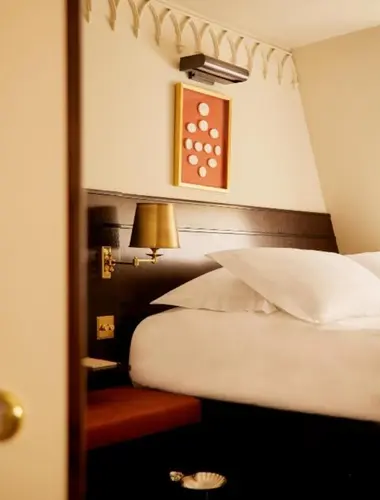
Guest room at Grand Hotel Bellevue Paddington London with dark timber headboard
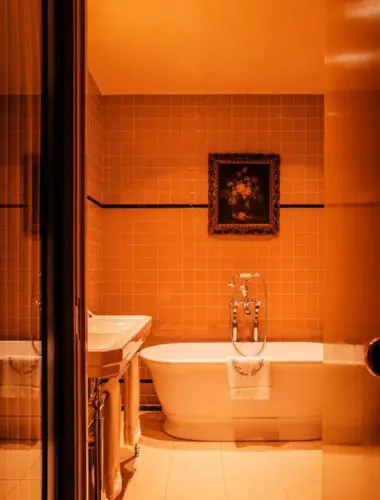
Freestanding bath at Grand Hotel Bellevue London with ochre tiled walls

The Laslett

Five Victorian townhouses filled with British art, books and furniture that make the hotel feel firmly part of Notting Hill.

Why stay here

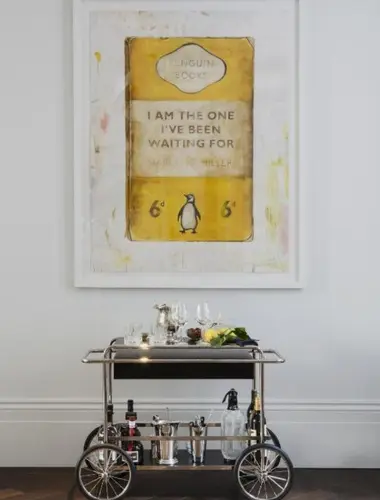
The Laslett understands that its strongest asset is the neighbourhood around it. Set across five white-fronted Victorian townhouses near Notting Hill Gate, the hotel draws on West London without turning it into decoration. British art, mid-century furniture, Penguin books, record players and pieces by local makers give the rooms the feeling of something accumulated gradually rather than installed all at once. Downstairs, The Henderson Bar and Kitchen blurs the line further, drawing in people from the neighbourhood throughout the day. Portobello Road is close, but so are the quieter residential streets that make Notting Hill worth staying in once the weekend crowds disappear.

Best for

Slower West London weekends, neighbourhood restaurants and travellers who want to feel more resident than visitor.
Bar trolley and Penguin book artwork at The Laslett hotels in Notting Hill London
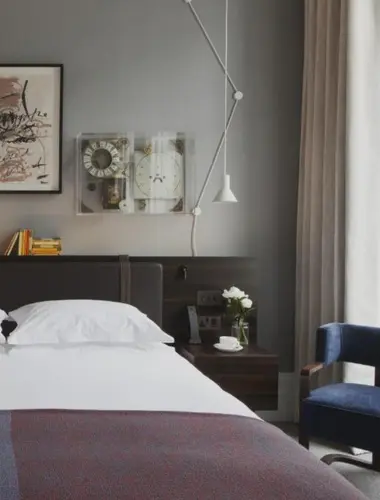
Guest room at The Laslett Notting Hill with grey walls and mid-century lamp

The London EDITION

Grand public rooms and restrained bedrooms give this Fitzrovia hotel two very different personalities.

Why stay here

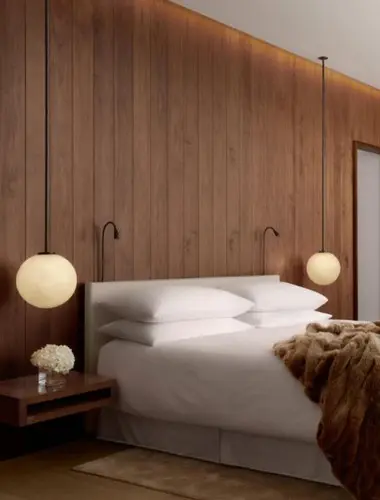
The London EDITION works through contrast. Berners Tavern occupies one of the building’s most ornate spaces, with high ceilings, chandeliers and walls crowded with portraits giving the restaurant almost theatrical scale. Upstairs, the bedrooms strip things back through oak floors, walnut panelling and a much quieter palette. Punch Room adds another shift again, smaller, darker and wood-panelled. The hotel sits just north of Soho, which means restaurants and later nights remain within easy walking distance without putting guests directly into the neighbourhood’s busiest streets. That separation is part of what makes the stay work.

Best for

Restaurant weekends, later evenings and guests who want Soho close without sleeping inside it.
the-london-edition-01
the-london-edition-02

Broadwick Soho

Colour, lacquer and a little excess in a hotel that understands Soho was never meant to feel restrained.

Why stay here

Broadwick Soho leans into the neighbourhood rather than trying to quieten it. Martin Brudnizki uses velvet, lacquer, brass, pattern and richer colour throughout, but the rooms remain controlled enough for the design to feel expressive rather than chaotic. The social spaces change with the day. Bar Jackie opens the hotel towards Broadwick Street, Dear Jackie takes dinner somewhere darker downstairs, and Flute pulls the evening towards the rooftop. Berwick Street is around the corner and much of Soho unfolds within a few minutes on foot. The hotel works because the energy outside and the interiors inside speak the same language.

Best for

Late nights, restaurant-heavy weekends and guests who want Soho at full volume.
hotels-in-soho-london-broadwick-soho-02
Guest room at Broadwick Soho London with blue walls and patterned lamp
Best Places To Eat In London Sessions Arts Club

Where to Eat Nearby

Sessions Arts Club

Set inside a grand former courthouse in Clerkenwell, Sessions Arts Club pairs striking architecture with thoughtful seasonal cooking. The high-ceilinged dining room feels open but never empty, long tables, soft light, and a steady hum that carries through the evening. The menu shifts often but keeps a light, confident touch. It’s a place people return to without needing a reason.

Boutique Hotels or Cool Hotels in London?

Boutique hotels are defined here by individuality: a particular building, interior author, smaller scale or relationship with the neighbourhood around it. Cool hotels make a stronger cultural argument. Their identity may come through music, food, nightlife, design or the social life of the ground floor rather than intimacy alone. London has plenty of overlap, particularly at NoMad, Broadwick Soho and The London EDITION. Choose boutique when architecture, detail and a more personal sense of place matter most. Start with the cool-hotels edit when you want a hotel with a stronger social energy or a more assertive point of view.