Music, restaurants and the part of central London that still feels creatively restless.
Soho has long been tied to the city’s creative life, recording studios above street corners, film and media offices behind narrow facades, old pubs and restaurants that have acted as meeting places for writers, musicians, artists and nightlife crowds for decades. The streets stay compact and closely layered together, giving the neighbourhood a different kind of energy to much of the West End around it. Soho still feels social in the truest sense of the word, somewhere people come to meet, work, eat, drink and stay out later than planned. If you are looking for hotels in Soho London, these are the stays that fit the neighbourhood best, central, expressive, and closely tied to the streets around them
Covent Garden
Theatre streets, restaurants and a steadier West End pace
Shoreditch
Creative studios, warehouse buildings and East London energy
Notting Hill
Leafier streets, quieter cafés and a more residential side of London
Soho works differently to most parts of London because very little of it shuts down early. Restaurants, bars, cafés and small venues run closely into one another across only a few streets, keeping the neighbourhood active from morning through late evening. Much of Soho’s appeal also comes from what sits behind the nightlife, recording studios, fashion offices, post-production houses and independent businesses that still give the area a stronger creative identity than much of central London. Staying here places you within walking distance of Covent Garden, Fitzrovia and the West End, though most days and nights tend to circle back into Soho itself.
These are the Soho hotels we would choose for later evenings, stronger restaurants and staying close to the creative side of central London.
Broadwick Soho pulls much of the neighbourhood inside it, crowded restaurants, late nights, stronger colour, and the constant pace that shapes this part of central London after dark.
Set on the corner of Broadwick Street and Berwick Street, Broadwick Soho stays closely tied to the streets outside its doors. Martin Brudnizki’s interiors are expressive without tipping into parody, balancing richer colours, layered textures and quieter corners against the noise below. Bar Jackie stays active from the morning onwards, Dear Jackie carries the evening later underground, and Flute pulls people up toward the rooftops late into the night. Even inside the hotel, Soho never feels far away.
Late weekends, restaurant and bar-focused stays, and travellers who want to stay inside Soho’s energy rather than step away from it.
Hazlitt’s holds onto an older version of Soho, quieter, more literary, and slightly removed from the pace outside it.
Set inside a row of eighteenth-century townhouses on Frith Street, Hazlitt’s feels closer to a private residence than a conventional hotel. There is little signage outside, and arriving still feels like being let into somewhere slightly hidden from the rest of Soho. Fireplaces, oil paintings, shelves lined with books and heavy curtains lean fully into the age of the building without making the place feel staged. Outside, Soho continues at full pace. Inside, the atmosphere shifts almost immediately.
Quieter weekends, literary London stays, and travellers who want Soho without the heavier pace outside.
The EDITION sits just north of Soho, close to the neighbourhood’s energy but slightly removed from its busiest streets.
Berners Tavern anchors much of the hotel from breakfast into late evening, while the Lobby Bar and Punch Room pull in much of the after-work and after-dinner crowd later into the night. Upstairs, the rooms shift quieter, oak floors, walnut panelling and softer lighting giving distance from the pace below. Fitzrovia softens things slightly compared to Soho itself, but the restaurants, bars and late evenings still sit only a short walk away.
Restaurant weekends, later evenings, and travellers who want Soho close without staying directly inside it.
The Bloomsbury sits on the quieter edge of Soho, where the streets widen slightly and the neighbourhood begins easing into Bloomsbury.
Set inside Sir Edwin Lutyens’ former YMCA headquarters, The Bloomsbury feels calmer and more spacious than many hotels around Soho itself. The Coral Room keeps the ground floor socially active into the evening, while Dalloway Terrace and the Bloomsbury Club Bar give the hotel a slower rhythm than the streets nearby. Soho, Covent Garden and Fitzrovia all sit within walking distance, though returning here feels noticeably quieter by comparison.
Longer weekends, restaurant-focused stays, and travellers who want Soho nearby with a calmer base to return to.
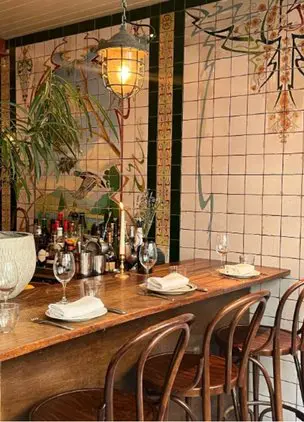
On a quieter Soho side street, Blanchette keeps much of the room gathered around smaller tables and longer dinners that stretch further into the evening. Inspired by traditional Parisian bistros, the menu leans into richer French cooking, charcuterie, escargots and slower dishes that suit this older side of Soho well. One of the restaurants in Soho that still feels built more around conversation than scene.
Soho and Covent Garden sit only a few streets apart, but the atmosphere changes quickly between them. Soho feels denser, louder and more restless, shaped by restaurants, bars, music venues and the creative industries that still run through the neighbourhood. Covent Garden moves at a steadier pace, built more around theatres, market streets and the rhythm of the West End. If you want later nights and a stronger social atmosphere, Soho makes the better base. If you want central London with slightly more space around the day, stay in Covent Garden.
Covent Garden
Theatre streets, restaurants and a steadier West End pace
Shoreditch
Creative studios, warehouse buildings and East London energy
Romantic Hotels in London
Softer light and more considered spaces
Our perspective
For collaborations and enquiries
We use cookies to improve your experience and understand how the site is used. You can accept or manage your preferences at any time.