Luxury Hotels in Tuscany

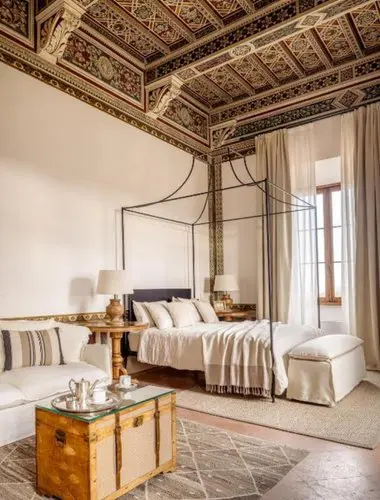
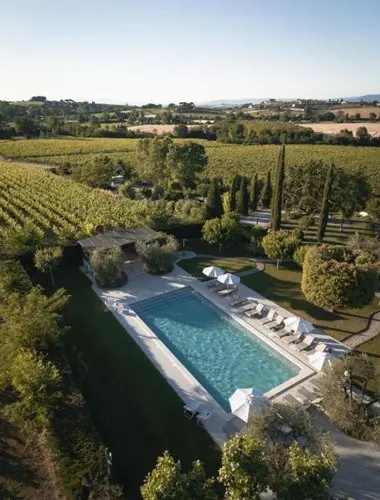
Tuscany’s most convincing luxury hotels do not all look luxurious in the conventional sense. One places guests on horseback across a 370-acre Maremma farm. Another uses local relationships to open difficult cellar doors around Bolgheri. In the Val d’Orcia, six rooms and an almost empty pool can be more valuable than an extensive spa. This edit moves between family-restored villas, wine hotels, cultural estates and full-service resorts. Each offers something hard to reproduce independently: protected space, expert access, serious hospitality or enough infrastructure for several generations to follow different versions of the same trip.

where-to-stay-in-tuscany-02

best for

• Private estates and significant historic buildings
• Personal service and hard-to-arrange access
• Celebrations and hotel-led itineraries
• Travellers spending for experience, not display

skip if

• You will spend little time at the property
• You prefer simple, unstructured farm stays
• Formal facilities matter more than character
• The room budget needs to remain flexible

Why book a luxury hotel in Tuscany?

Luxury is most useful in Tuscany when it removes friction or grants access. A well-connected host can arrange cellar visits that are difficult to secure alone. A large estate gives riding, walking, dining and swimming enough space to coexist. A six-room country house provides attention that cannot be delivered by a resort, while a larger property can keep children, spa time and wine tasting on separate schedules. High prices still need scrutiny. Old stone, cypress trees and a distant view are not sufficient arguments by themselves. The strongest hotels make the additional spend visible through land, restoration, expertise, privacy or how confidently the day is handled.

Hotels

La Pescaia Resort

A nineteenth-century Maremma farm where the finest room may be the saddle at first light.

Why stay here

La Pescaia keeps the riding culture of the Maremma at the centre of its 370-acre estate. Horses live in the stables, trails cross olive groves and oak woods, and deer still move through the quieter parts of the land. Fourteen rooms and two apartments occupy one of the region's last nineteenth-century villa farms. A travertine pool and bocce court take over later in the day; the kitchen works from an organic garden. The property's luxury is clearest on horseback, when the estate becomes something to travel through rather than scenery beyond a terrace.

Best for

Active country stays built around horses, open land and early mornings outdoors.
tuscany-hotels-la-pescaia-resort-01
tuscany-hotels-la-pescaia-resort-02

Locanda Rossa

A red Maremma farmhouse where olive groves, honey and open beaches loosen Tuscany's formality.

Why stay here

Locanda Rossa spreads rooms, suites and four villas across 41 acres near Capalbio. The Maremma changes the mood immediately. Olive oil comes from 3,800 estate trees, honey from hives in the grounds and the kitchen looks to nearby farms and fisheries for the rest. Pools and gardens keep days outside, while the long beaches of southern Tuscany are a short drive away. Capalbio's walls sit five minutes inland. The property is fashionable in August and far quieter on either side. This is coastal-country luxury with salt in the air and fewer rules about the afternoon.

Best for

Warm-weather stays combining Maremma farmland, Capalbio and quieter stretches of coast.
tuscany-hotels-locanda-rossa-01
tuscany-hotels-locanda-rossa-02

Villa di Piazzano

A cardinal's fifteenth-century hunting villa kept domestic by the family who restored it.

Why stay here

Villa di Piazzano was built for Cardinal Silvio Passerini and later used as a convent; the rooftop bell still carries the Medici arms. Its current character comes from the Wimpole family, who found the property in 1998 and restored it without inflating the villa into a resort. Gardens, pool and dining room retain the proportions of a country house. Cortona is minutes away and Lake Trasimeno brings a different light across the border. The history is substantial, yet the stay remains personal. Luxury here feels inherited, looked after and quietly shared.

Best for

Heritage stays where family stewardship matters more than formal grandeur.
tuscany-hotels-villa-di-piazzano-01
tuscany-hotels-villa-di-piazzano-02

Relais Sant'Elena

Sixteen rooms on a 580-acre estate with Bolgheri's most guarded cellar doors close by.

Why stay here

Relais Sant'Elena occupies 580 acres of Mediterranean farmland near the Etruscan Coast, placing guests within ten minutes of Ornellaia, Le Macchiole and Castello di Bolgheri. The team arranges the visits that give this stay its real value, then brings everyone back to sixteen rooms, a pool and an estate kitchen. Eleven types of olive oil are pressed here, often on the day of harvest, giving the property's own agriculture equal presence at the table. The sea sits close beyond the cypress roads. Bolgheri luxury is largely about access, and Sant'Elena knows which doors matter.

Best for

Serious wine itineraries with insider cellar access and the Tuscan coast nearby.
tuscany-hotels-relais-santelena-01
tuscany-hotels-relais-santelena-02

Poggio Piglia

Nine suites above olive groves, offering southern Tuscany's landscape without its headline prices.

Why stay here

Poggio Piglia leaves out much of what usually signals luxury. There is no sprawling spa or grand arrival, only nine generous suites, a serious kitchen, oil from more than nine hundred estate trees and an infinity pool facing an empty valley. The location near Chiusi, four kilometres from Umbria, keeps the property outside Tuscany's most fashionable circuits. That distance works in its favour. Rooms stay quiet, the landscape loses its audience and prices remain below better-known Val d'Orcia estates. A luxury address for people who have stopped needing the address to announce itself.

Best for

Understated stays where privacy, food and landscape matter more than hotel theatre.
tuscany-hotels-poggio-piglia-01
tuscany-hotels-poggio-piglia-02

Precise Tale Poggio Alla Sala

A complete villa resort where wine, wellness, children and idleness can follow separate schedules.

Why stay here

Poggio Alla Sala makes a case for luxury through completeness. Sixty rooms and suites occupy a neoclassical villa and its wings, with restored frescoes, terracotta and vaults carrying the architecture through the larger scale. Four pools separate adults, children, indoor swimming and the main social space. The spa moves between Ayurvedic and western practice; dining runs from poolside to more formal evenings. Vino Nobile vineyards begin beyond the estate. This is the Tuscan hotel for a group that cannot agree on the day, because nobody has to surrender their version of it.

Best for

Families and groups who want full infrastructure without leaving the Montepulciano countryside.
tuscany-hotels-precise-tale-poggio-alla-sala-01
tuscany-hotels-precise-tale-poggio-alla-sala-02

Borgo San Vincenzo

A wine hotel where access to producers carries more value than another layer of polish.

Why stay here

Borgo San Vincenzo spends its energy on what happens beyond the room. The 1780 borgo provides 21 comfortable studios and suites, while the owners build days around private cellar visits, producer dinners and tastings across Vino Nobile country. Their knowledge turns a landscape of similar-looking vineyard roads into a sequence of distinct estates and people. Service feels hosted rather than scripted. For travellers who regard understanding wine as part of the pleasure, the programme becomes the luxury. San Vincenzo offers one of the strongest experience-to-price arguments among the best luxury hotels in Tuscany.

Best for

Wine-focused travellers who value expertise, introductions and a strong sense of access.
tuscany-hotels-borgo-san-vincenzo-01
tuscany-hotels-borgo-san-vincenzo-02

Locanda in Tuscany

Nine hosted rooms in the quietest part of the valley, with dinner holding the day together.

Why stay here

Locanda in Tuscany occupies a seventeenth-century country house near Castiglione d'Orcia, far enough from a village for the silence to become part of the arrangement. Nine rooms keep stone walls, timber beams and linen in a register closer to a private house than a resort. The owners left Milan for this landscape and still shape the stay personally, from dinner built around nearby farms to the walk worth taking that morning. Bagno Vignoni and the Via Francigena are close. Evenings belong to the table. The valley feels larger when the hotel remains this small.

Best for

Hosted stays, long dinners and travellers who want the Val d'Orcia without an audience.
tuscany-hotels-locanda-in-tuscany-01
tuscany-hotels-locanda-in-tuscany-02

La Saracina

Six rooms giving the Val d'Orcia the privacy and attention of a well-kept country house.

Why stay here

La Saracina achieves exclusivity through numbers. Six rooms share a cypress drive, lavender gardens and a pool facing the Val d'Orcia, so even a full house rarely feels busy. Vaulted ceilings and a few hot tubs add comfort without shifting the atmosphere towards resort life. Pienza, Montepulciano and Montalcino all sit within easy reach, though the long afternoons at the house are the better argument. Staff know every guest because there are so few to know. For anniversaries, small buyouts or anyone allergic to lobbies, that scale becomes the luxury.

Best for

Private celebrations and travellers who want the valley with almost nobody else around.
tuscany-hotels-la-saracina-01
tuscany-hotels-la-saracina-02

Villa Lena

A cultural estate where the rarest amenity is a working community of artists.

Why stay here

Villa Lena gives luxury a social and creative dimension. Its foundation brings artists into residence across the Palaia estate, sharing studios, exhibitions and dinner tables with hotel guests. Much of the art was made on the property, so culture feels produced here rather than shipped in after the renovation. Pools, olive groves and organic gardens provide the expected Tuscan ease, but the people give the stay its energy. Conversations continue beyond dinner. Projects appear mid-process. For a certain traveller, access to a living creative community is worth more than marble ever could be.

Best for

Creative travellers who want participation, conversation and art made on the premises.
tuscany-hotels-villa-lena-01
tuscany-hotels-villa-lena-02

Lupaia

Twelve rooms, five farmhouses and two owners proving that attention can outvalue infrastructure.

Why stay here

Lupaia concentrates luxury into a small compass. Heidi and Christopher Mueller remain present across twelve rooms, dinners are cooked for the house rather than a large dining room and five restored farmhouses hold the couple's consistent eye for brick, bleached timber, old tiles and antiques. There is no branded layer between the guest and the people responsible for the place. The pool looks towards Montepulciano; evenings settle beneath the pergola. Larger Tuscan hotels can offer more facilities. Few can reproduce the feeling that every decision passed through the same two pairs of hands.

Best for

Travellers who measure luxury through scarcity, authorship and personal attention.
tuscany-hotels-lupaia-01
tuscany-hotels-lupaia-02
Places To Eat In Tuscany Osteria Le Logge

Where to Eat Nearby

Osteria Le Logge

Inside Siena’s old streets, Osteria Le Logge blends the character of a traditional osteria with a slightly more thoughtful kitchen. Fresh pasta, Tuscan meats, and seasonal vegetables move across the menu with care. The room stays lively but relaxed. Among the many places to eat in Tuscany, it’s a restaurant people return to again and again.

Luxury hotels or the best hotels in Tuscany?

The Revel Stay edit of Best Hotels in Tuscany takes a wider view, selecting properties for architecture, food, ownership, landscape or originality regardless of price. Several are luxurious, but cost and service are not the conditions for inclusion. This page concentrates on stays where a higher budget buys something material: substantial private land, unusually personal attention, specialist access or facilities capable of supporting a more complex trip. Start with the best-hotels edit for the broadest view of Tuscany. Choose luxury when the property itself will take a larger share of both the budget and the experience.