Best Hotels in Tuscany

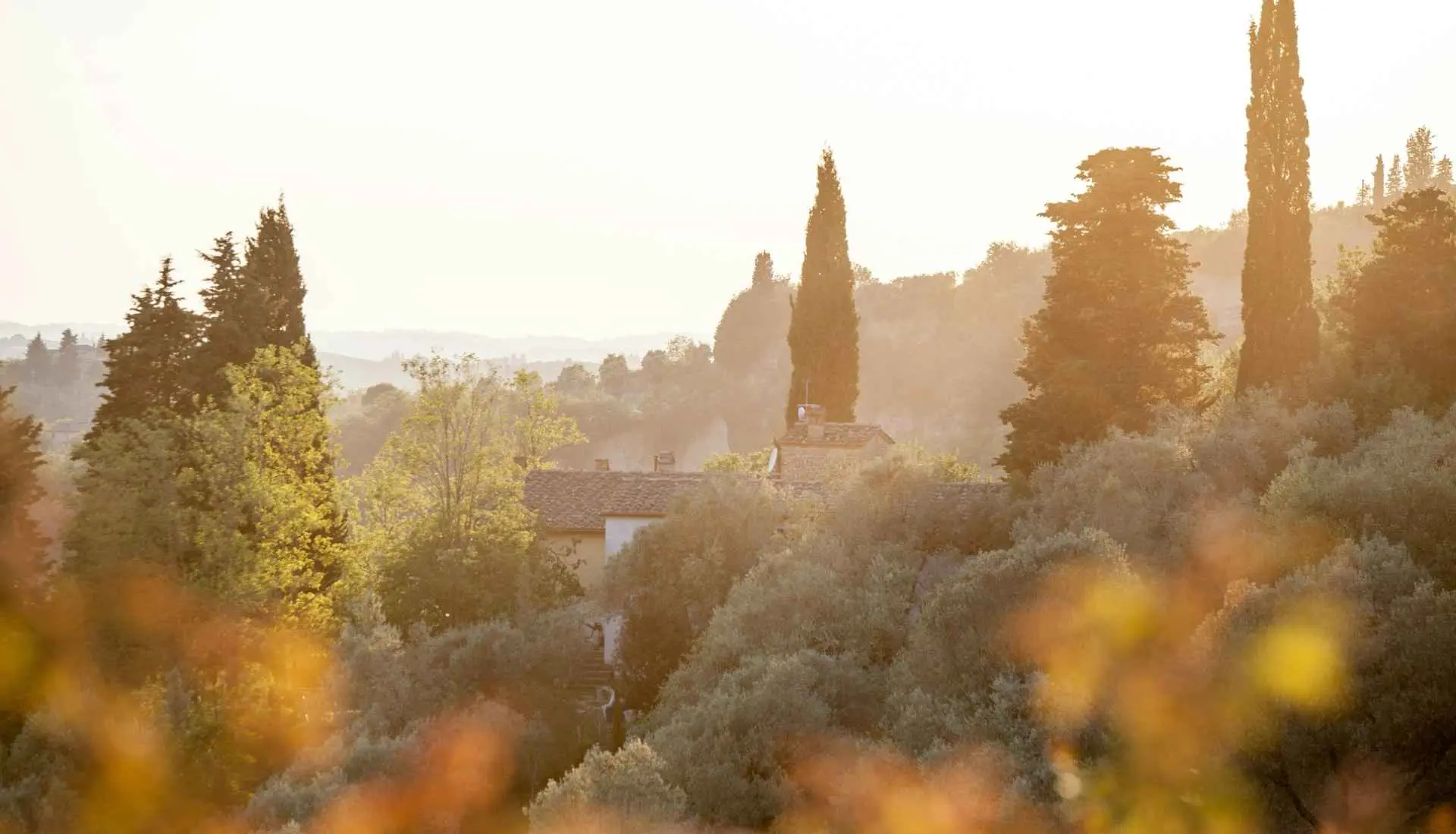
The best hotels in Tuscany do more than reproduce the region’s familiar materials. Old stone, timber and terracotta appear throughout this edit, but they are not the reason these properties were selected. One runs an entirely vegan farm beneath San Gimignano. Another operates a regenerative agricultural estate across 170 hectares. In the Maremma, horses open the landscape; near Bolgheri, local relationships open cellar doors. The selection moves from highly polished country houses to simple rooms attached to working farms. Each hotel offers a distinct way into its territory, whether through wine, food, art, family ownership or land still being actively used.

hotels-in-tuscany-01

best for

• Hotels shaped by food, wine and agriculture
• Historic buildings with a continuing purpose
• Travellers exploring several Tuscan regions
• Stays where the property carries part of the trip

skip if

• You want a single walkable city base
• You prefer predictable resort facilities
• Driving through rural Tuscany feels burdensome
• You will spend almost no time at the hotel

Why book one of the best hotels in Tuscany?

A strong Tuscan hotel should explain why it belongs to its particular hill, town or agricultural territory. That could mean Brunello vines below a fortified hamlet, Carmignano cellars with a documented history stretching back centuries, or a Maremma estate crossed most convincingly on horseback. Ownership matters, as do the people cooking, producing wine and deciding how old buildings should be restored. This page is intentionally broader than a luxury list. Some properties provide spas and polished service; others keep the rooms simple because the cellar, farm or surrounding landscape is the real reason to arrive. Difference, rather than uniform perfection, is the point.

Hotels

Podere Conti

A seventeenth-century farmhouse giving Tuscany’s wooded northern edge a seat at the table.

Why stay here

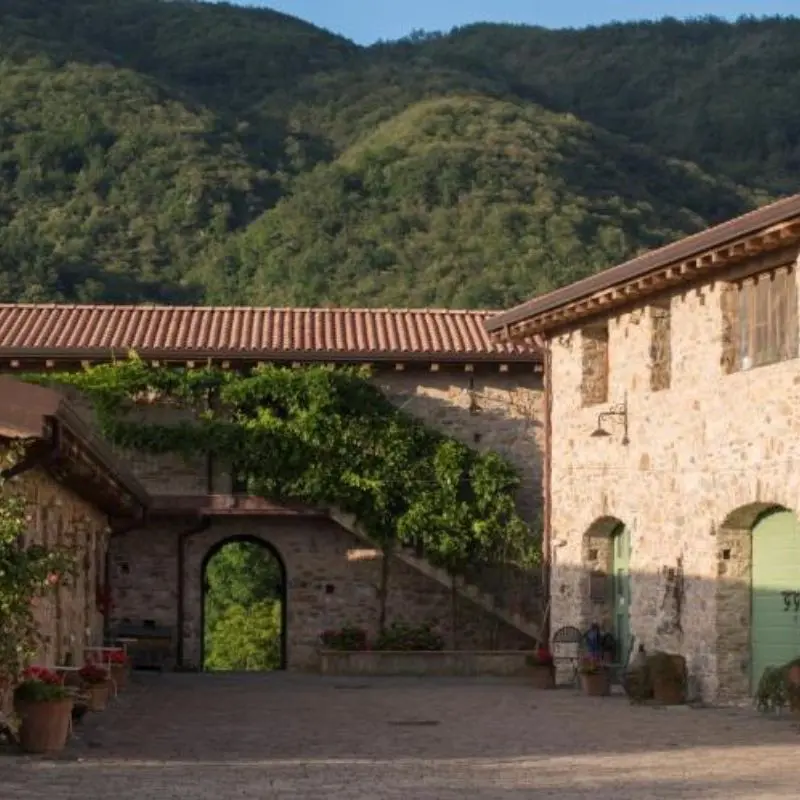
Podere Conti sits in Lunigiana, where woodland, stone villages and the Apennines replace the open vineyard geometry associated with central Tuscany. Its thirteen rooms occupy a seventeenth-century farmhouse restored with stone walls, timber beams and an intentionally domestic scale. Olive oil, honey and vegetables from the property feed into the kitchen, while dinner gathers guests at communal tables rather than dividing the evening into isolated reservations. The setting is greener, rougher and less internationally polished than the Val d’Orcia. That geographical difference is precisely why it belongs here. Tuscany becomes more interesting when the familiar postcard begins to break down.

Best for

Northern Tuscany, communal dinners and travellers interested in the region beyond its famous wine roads.
best hotels in tuscany
Tuscany Travel Guide Podere Conti

La Pescaia Resort

A nineteenth-century Maremma farm best understood from the saddle rather than the terrace.

Why stay here

La Pescaia keeps horses and riding at the centre of its 370-acre estate. Trails pass through olive groves, oak woodland and sections of land where deer still appear, allowing guests to experience the Maremma as terrain rather than a distant view. Fourteen rooms and two apartments occupy one of the region’s remaining nineteenth-century villa farms. A travertine pool, bocce court and kitchen supplied by an organic garden take over later in the day. Plenty of rural hotels offer a stable as an additional activity. Here, riding provides the clearest argument for the estate and the most memorable way to understand its scale.

Best for

Experienced or curious riders, active country stays and travellers who want mornings outdoors.
tuscany-hotels-la-pescaia-resort-01
tuscany-hotels-la-pescaia-resort-02

Locanda Rossa

A Maremma estate where olive oil, honey and the nearby coast give Tuscany a looser register.

Why stay here

Locanda Rossa spreads rooms, suites and four villas across 41 acres near Capalbio. More than 3,800 olive trees supply the estate oil, while hives in the grounds produce honey and the kitchen works with nearby farms and fisheries. That last relationship matters: the Maremma is close enough to the sea for fish and salt air to enter a hotel stay usually described only through farmland. Pools and gardens carry warm days, with southern Tuscany’s broad beaches a short drive away. The property becomes fashionable in August and considerably easier outside it. Come for country space without surrendering the coast.

Best for

Maremma road trips, coastal days and travellers who want their Tuscan stay less formal.
tuscany-hotels-locanda-rossa-01
tuscany-hotels-locanda-rossa-02

Villa di Piazzano

A cardinal’s former hunting villa kept human in scale by the family who restored it.

Why stay here

Villa di Piazzano was built in the fifteenth century for Cardinal Silvio Passerini and later used as a convent. Its rooftop bell still carries the Medici arms, but the hotel’s present character comes from the Wimpole family, who found the property in 1998 and restored it as a country house rather than a grand resort. Gardens, pool and dining room retain manageable proportions, keeping the history close instead of theatrical. Cortona is minutes away, while Lake Trasimeno introduces the landscape of neighbouring Umbria. It belongs in this edit because substantial architecture and personal stewardship remain comfortably in balance.

Best for

Family-held hospitality, Renaissance architecture and exploring the border between Tuscany and Umbria.
tuscany-hotels-villa-di-piazzano-01
tuscany-hotels-villa-di-piazzano-02

Relais Sant'Elena

A Bolgheri base where local introductions carry more value than another layer of hotel polish.

Why stay here

Relais Sant’Elena occupies a large Mediterranean estate near the Etruscan Coast, within minutes of producers including Ornellaia, Le Macchiole and Castello di Bolgheri. The hotel team arranges visits across the appellation, turning a group of guarded cellar doors into a coherent wine itinerary. Sixteen rooms, a pool and farm cooking provide a composed place to return to between appointments. The estate’s own agricultural speciality is olive oil, pressed from eleven varieties and often tasted during harvest. Sant’Elena earns its position through access and local knowledge. The vineyards do not need to belong to the hotel when the right people answer its calls.

Best for

Bolgheri wine trips, difficult cellar appointments and combining the coast with a rural base.
tuscany-hotels-relais-santelena-01
tuscany-hotels-relais-santelena-02

Tenuta CastelGiocondo

Seven rooms inside a fortified Frescobaldi hamlet that helped establish Brunello in the nineteenth century.

Why stay here

CastelGiocondo was fortified around 1100 to watch the road between Siena and the coast. Today it belongs to the Frescobaldi family, with seven guest rooms inside a working wine estate closely tied to Brunello’s nineteenth-century development. Cellar staff, vineyard workers and hospitality all belong to the same place, giving tastings a continuity larger wine resorts struggle to reproduce. Breakfast comes from the hamlet ovens, contemporary art appears among the medieval walls and a small spa faces the vineyard rows. This is not simply a hotel in wine country. It is the rare opportunity to sleep inside one of the territory’s defining estates.

Best for

Brunello collectors, historic wine estates and travellers who prefer seven rooms to resort scale.
tuscany-hotels-tenuta-castelgiocondo-01
tuscany-hotels-tenuta-castelgiocondo-02

Villa Lena

A country estate where an active artist residency changes what happens around the pool and dinner table.

Why stay here

Villa Lena shares its Palaia estate with a working artist residency. Studios occupy the outbuildings, residents eat alongside hotel guests and exhibitions often begin with work made on the property. That continuing production prevents the art from feeling like decoration selected after the renovation. A nineteenth-century villa, organic gardens, olive groves and pools provide the expected Tuscan setting, but the atmosphere comes from people making, discussing and occasionally revising things within it. Florence and Pisa are both reachable in around an hour, although the estate is most convincing when neither controls the day. It gives rural Tuscany a cultural life beyond preservation.

Best for

Artists, creative travellers and guests who prefer participation and conversation to country-house formality.
tuscany-hotels-villa-lena-01
tuscany-hotels-villa-lena-02

Agriturismo La Fattoria di Capezzana

A Carmignano estate documented since 804, with simple rooms attached to an exceptional agricultural history.

Why stay here

Wine and olive oil production has been recorded at Capezzana since 804. That timeline is impressive, but the present-day cellar, vineyards and vinsantaia keep it from becoming a historical statistic. Guests stay in straightforward rooms, then follow the estate through tastings, cooking classes and lunches at the enoteca-osteria. The Contini Bonacossi family also played an important role in restoring Carmignano’s identity as a distinct wine denomination. Capezzana makes this page because its accumulated knowledge remains accessible rather than ceremonial. Newer estates may offer finer bedrooms, but very few can show what twelve centuries of agricultural continuity actually look like.

Best for

Wine history, working cellars and travellers willing to exchange room polish for depth and access.
tuscany-hotels-agriturismo-la-fattoria-di-capezzana-01
tuscany-hotels-agriturismo-la-fattoria-di-capezzana-02

Villa Petriolo

A regenerative agricultural estate where the farm supplies two restaurants, a spa and much of the daily programme.

Why stay here

Villa Petriolo operates across 170 certified-organic hectares near Cerreto Guidi. Animals, orchards, vegetables, vines and olive groves feed the kitchens and give the property a working calendar independent of guest arrivals. Renewable energy and water recovery sit within the same system, while visitors can follow production through field walks, tastings and menus that change with the harvest. The sixteenth-century villa brings polished rooms, and the MATER spa uses botanical treatments connected to the estate’s plants. Petriolo makes the best edit because agriculture is treated as infrastructure, not atmosphere. The hotel is attached to a functioning farm economy rather than surrounded by a pastoral set.

Best for

Regenerative farming, serious food and travellers who want comfort without losing sight of production.
tuscany-hotels-villa-petriolo-01
tuscany-hotels-villa-petriolo-02

Lupaia

A former goat farm where owner-led hospitality and a direct view of Montepulciano carry equal weight.

Why stay here

Lupaia occupies five farm buildings dating from 1622 on a hillside facing Montepulciano. The original arrangement placed animals below and farming families above, and traces of that use remain in the exposed brick, old tiles and paths between houses. Heidi and Christopher Mueller restored the property after viewing more than sixty alternatives, then kept the room count to twelve. That scale allows dinner, breakfast and advice about the day to remain personal. The pool faces Montepulciano across the valley, but the hotel does not rely on the view alone. It belongs here because its owners are still visibly involved in how the house feels.

Best for

Romantic stays, personal hosting and travellers who want Montepulciano present but not outside the door.
tuscany-hotels-lupaia-01
tuscany-hotels-lupaia-02

Agriturismo I Pini

A fully vegan farm beneath San Gimignano where the kitchen, vineyard and eleven rooms follow one argument.

Why stay here

I Pini carries its environmental position through the entire property rather than confining it to a paragraph on the menu. The farm, winery, shop and restaurant are organic and fully vegan, with old vines, olive groves and kitchen gardens supplying much of what guests eat and drink. A 2018 renovation used clay, hemp, lime and other local materials to improve the sixteenth-century farmhouse without separating it from the fields. San Gimignano’s towers rise across the valley beyond the pool. The conviction is what earns its place here. By dinner, the relationship between farming, building and food requires very little explanation.

Best for

Plant-led food, organic wine and travellers who value consistency between principles and practice.
tuscany-hotels-agriturismo-i-pini-02
tuscany-hotels-agriturismo-i-pini-01
Places To Eat In Tuscany Osteria Miranda

Where to Eat Nearby

Osteria Miranda

In the small hill town of Montisi, Osteria Miranda keeps things grounded in the cooking people know here. Pici pasta with ragù, slow-braised meats, and vegetables from nearby farms appear on a menu that moves with the seasons. The room is small and lively most evenings. Among places to eat in Tuscany, it feels firmly rooted in village life.

Best hotels or luxury hotels in Tuscany?

This page takes the broadest view of Tuscany’s strongest stays. A hotel may earn its place through a working farm, an artist residency, an exceptional cellar, family ownership or access to a less-visited landscape. Several are luxurious, but expense is not the shared condition. The Revel Stay edit of Luxury Hotels in Tuscany concentrates more directly on what a larger budget buys: privacy, extensive land, highly personal service, specialist access and facilities capable of supporting a hotel-led trip. Start here for the widest editorial overview. Choose the luxury edit when the property will take a larger share of both the budget and the itinerary.