Montepulciano

Vino Nobile cellars, steep stone streets and a hill town that keeps wine close to everyday life.

Hotels In Montepulciano

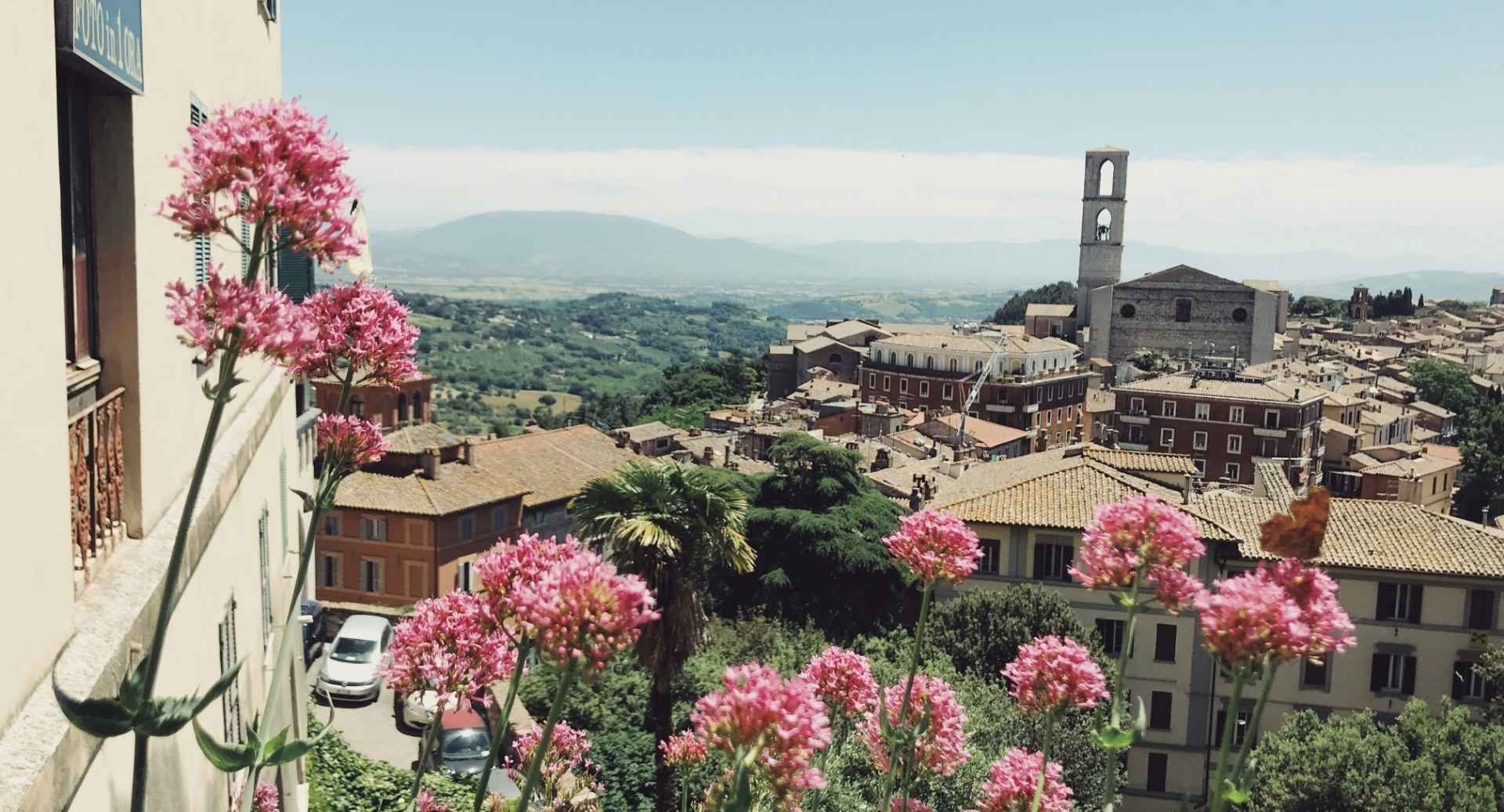
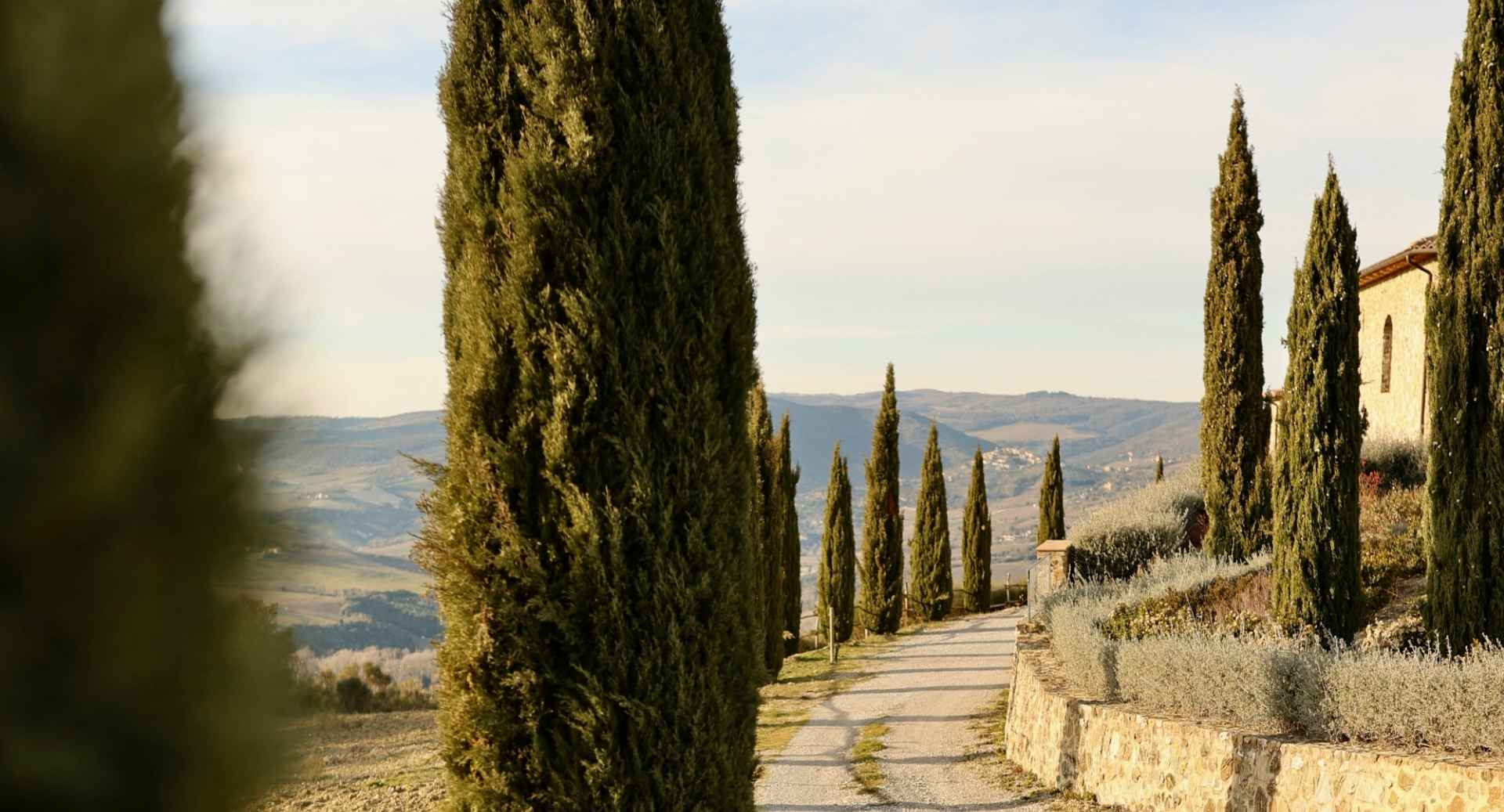
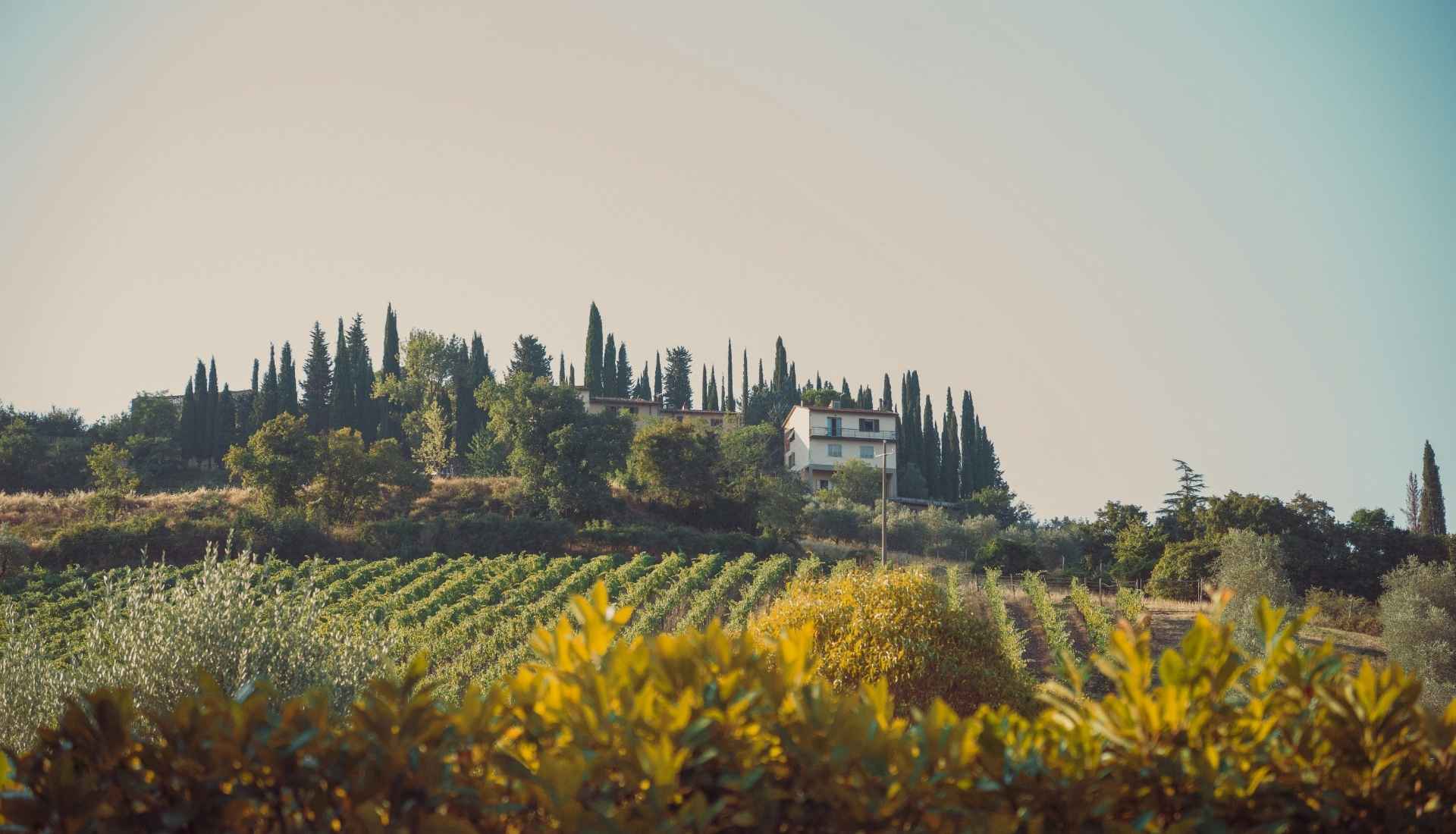
Montepulciano rises sharply above southern Tuscany, its main street climbing past Renaissance palazzi, wine cellars and small restaurants before reaching Piazza Grande. The town is compact, but the surrounding wine country spreads towards the Val di Chiana and the Umbrian border. Staying nearby gives Vino Nobile more context than a single tasting can provide. Some hotels sit beneath the walls, close enough to walk into town. Others place guests directly among the vines, with producers, cellar visits and estate dinners shaping the stay. A car remains useful, though several properties make it possible to leave the keys untouched for part of the day.

best for

• Vino Nobile tastings and cellar visits
• Hill-town evenings after visitors leave
• Rural hotels with strong kitchens
• Exploring southern Tuscany by car

skip if

• You dislike steep streets and uphill walks
• Wine is incidental to your trip
• You want major museums and city nightlife
• You plan to travel entirely by public transport

Why stay in Montepulciano?

Montepulciano combines a functioning wine town with countryside that begins immediately below its walls. Cellars occupy historic buildings in the centre, while vineyards and farm stays spread across the slopes outside. That proximity lets the trip move easily between producers, town restaurants and afternoons at the hotel. It also provides a useful base for Pienza, Chiusi and the thermal villages further south. The important decision is whether to stay inside the town or face it from the countryside. The centre gives you dinner on foot and early access to the streets. A rural property provides a pool, vines and more reason to remain in place.

Hotels In Montepulciano

Hotels

Poggio Piglia

Nine suites and nine hundred olive trees at the quiet edge of Tuscany and Umbria.

Why stay here

Poggio Piglia sits in Macciano, four kilometres from Umbria and well beyond Montepulciano's busiest orbit. More than nine hundred olive trees surround nine suites, producing the estate oil that appears at the table. Beamed ceilings and oak floors keep the rooms grounded, while an infinity pool takes the open valley head on. Chiusi's Etruscan museum and railway station are ten minutes away, making the remoteness unexpectedly practical. Montepulciano remains within reach, but evenings belong to this less fashionable corner. Tuscany becomes quieter here without becoming difficult.

Best for

Longer rural stays with Montepulciano nearby and useful rail connections at Chiusi.
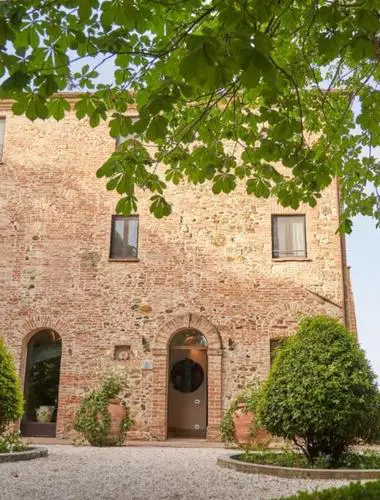
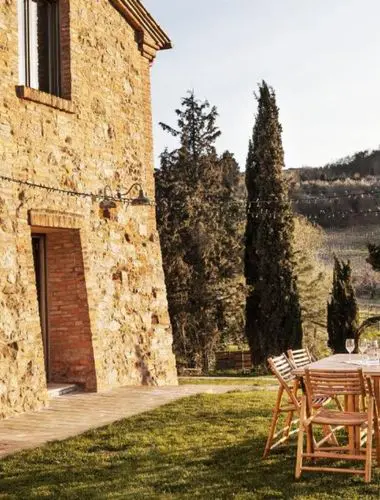
Historic brick farmhouse surrounded by greenery at Poggio Piglia near Montepulciano
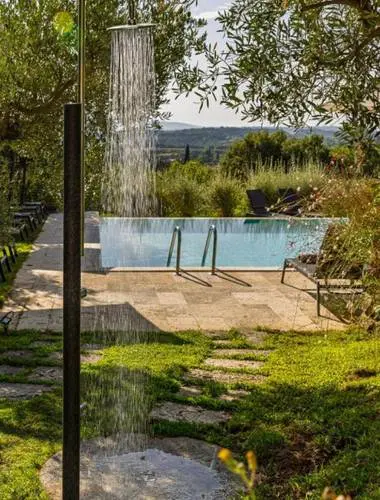
- Outdoor shower and infinity pool overlooking the Tuscan countryside at Poggio Piglia

Salcheto WineHouse

Nine farmhouse rooms beside an off-grid cellar that made wine sustainability measurable.

Why stay here

Salcheto rebuilt its cellar in 2011 to operate independently of mains power and water. That same year, the estate certified the world's first carbon footprint for a bottle of wine. The WineHouse places nine rooms inside the thirteenth-century farmhouse beside that working experiment, with organic Vino Nobile vines outside and wood-fired hot tubs in the garden. Cellar tours carry more substance than the usual sustainability language because the engineering is visible. Montepulciano stands across the valley. This is a wine stay with receipts, down to the lighter bottle waiting on the table.

Best for

Wine travellers who want sustainability demonstrated through the cellar rather than a hotel statement.
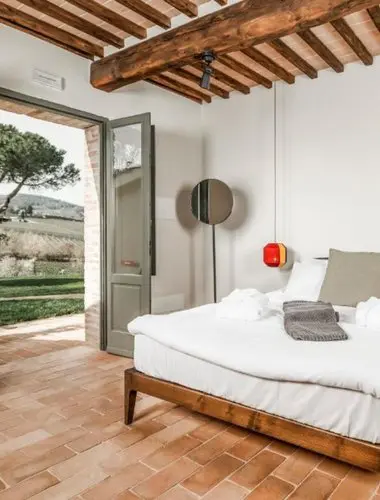
Bright farmhouse bedroom with exposed wooden beams at Salcheto WineHouse
- Stone farmhouse and garden overlooking the vineyards at Salcheto WineHouse near Montepulciano

Precise Tale Poggio Alla Sala

A sixty-suite villa estate giving families, spa days and Vino Nobile room to coexist.

Why stay here

Poggio Alla Sala brings resort scale to the Montepulciano hills. An eighteenth-century neoclassical villa and its wings hold sixty rooms and suites, with frescoes, terracotta and vaults carrying the older building through a more cosmopolitan interior. Four pools divide the day by mood: main, adults-only, children's and indoor. The spa combines Ayurvedic and western treatments, while an associated Vino Nobile winery sits less than three kilometres away. Smaller hotels ask everyone to want the same kind of trip. Poggio Alla Sala works because a family can arrive with entirely different plans.

Best for

Families and mixed-interest trips combining wine, spa time and full hotel service.
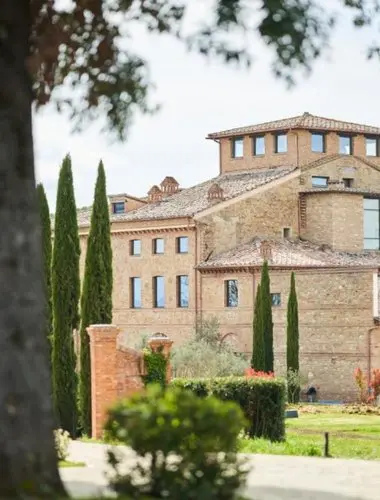
Historic stone villa and cypress trees at Poggio Alla Sala near Montepulciano
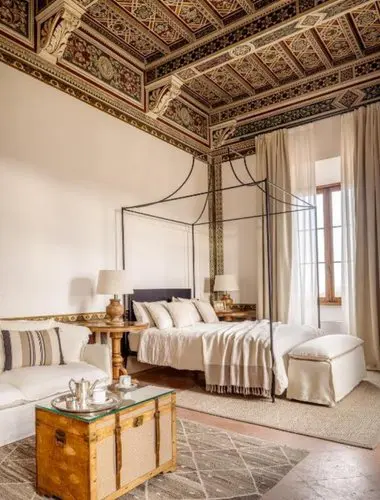
- Elegant suite with ornate painted ceiling at Poggio Alla Sala

Agriturismo San Martino

An ecological farmhouse within walking distance of Montepulciano, with the town framed above every field.

Why stay here

San Martino sits below Montepulciano's walls, close enough for the walk uphill to replace another drive. The view keeps the town present from breakfast onwards. Organic gardens supply the vegetarian restaurant, natural paints cover the rooms and a swimming pond is filtered by freshwater plants instead of chlorine. These choices give the agriturismo a gentle, handmade quality that feels connected to the fields around it. The town takes around fifteen minutes on foot. Few countryside hotels let guests live with Montepulciano this closely, watching it change through the day before walking home after dinner.

Best for

Car-light stays shaped by vegetarian cooking, ecological choices and Montepulciano on foot.
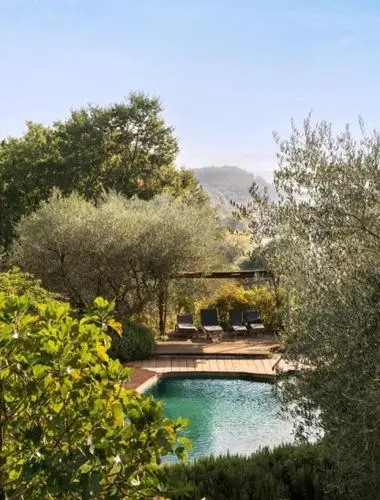
Natural swimming pool surrounded by olive trees at Agriturismo San Martino in Montepulciano
- Rustic dining room with wooden cabinet at Agriturismo San Martino

Borgo San Vincenzo

A 1780 wine borgo where Montepulciano becomes something to understand, not simply taste.

Why stay here

Borgo San Vincenzo takes its name from the patron saint of winemakers and uses wine as the organising principle for the stay. Scott and Shannon Kircher restored the 1780 buildings into 21 studios and suites, then built a programme around the vineyards beginning at the property line. Producer-led tastings, cellar visits and wine dinners move beyond a single estate, giving guests a wider reading of Vino Nobile country. Montepulciano is minutes away, best reached before the streets fill. For travellers who return wanting to know what was in the glass, this is the hotel that keeps answering.

Best for

Curious wine travellers who want access, context and producers beyond a standard tasting.
Swimming pool surrounded by vineyards at Borgo San Vincenzo near Montepulciano
- Rustic guest room with countryside views at Borgo San Vincenzo
Best Tuscan Wineries Avignonesi

Where to Eat Nearby

Avignonesi

Near Montepulciano, Avignonesi has quietly become one of the leading biodynamic estates in the region. Vineyards are worked without chemicals, and the wines, especially Vino Nobile, feel precise but still shaped by the soil they come from. Tastings move slowly through the estate. Among the best Tuscan wineries, this is one where the philosophy behind the wine really shows.

Montepulciano or Val d’Orcia?

Montepulciano is the stronger choice when wine, cellar visits and having a substantial hill town nearby are central to the trip. Its hotels tend to look towards Vino Nobile country, with Montepulciano itself providing restaurants, architecture and evening life. The Revel Stay guide to Val d’Orcia covers a broader and more dispersed landscape shaped by Pienza, Montalcino, Bagno Vignoni and long drives between small settlements. Choose Montepulciano for a clearer base and deeper access to one wine territory. Choose the Val d’Orcia when the road, changing landscape and movement between several towns are the main event.

Explore Other Neighbourhoods

Hotels in Val d'Orcia

Val d'Orcia

Brunello vineyards, thermal water and long roads between some of southern Tuscany’s smallest towns.

Hotels in Chianti

Chianti

Working cellars, white roads and wine estates stretched between Florence and Siena.

Hotels in Florence

Florence

Renaissance streets, working markets and country estates that keep the city within reach.