Val d’Orcia

Brunello vineyards, thermal water and long roads between some of southern Tuscany’s smallest towns.

Affordable Hotels In Tuscany

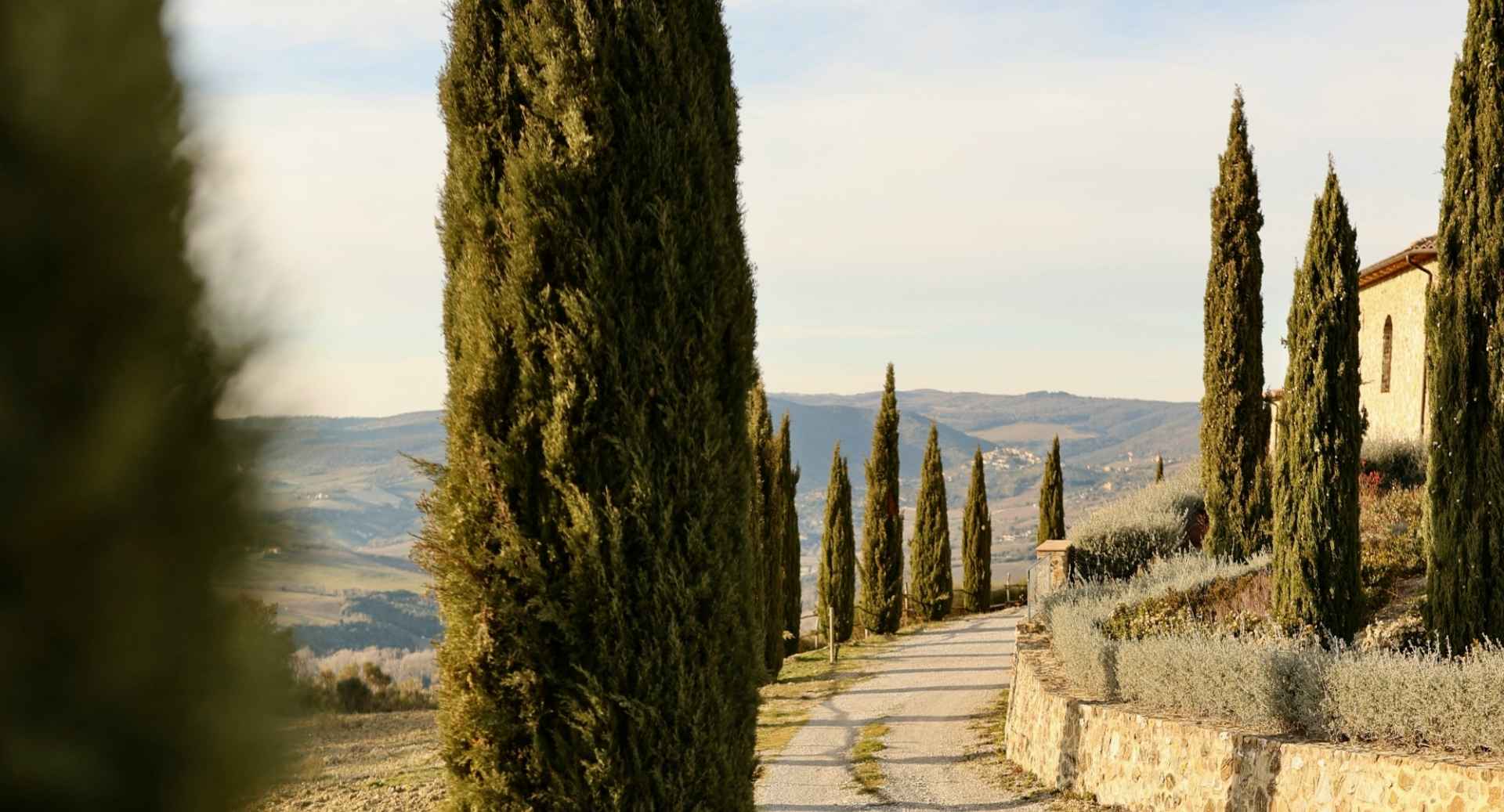
The Val d’Orcia is the Tuscany most people recognise before they arrive: isolated farmhouses, cypress-lined roads and hills shaped by centuries of cultivation. Staying here reveals the practical landscape behind the image. Montalcino’s vineyards produce Brunello, Pienza remains closely tied to pecorino, and thermal water surfaces at Bagno Vignoni and across the hills near Castiglione d’Orcia. The distances are not enormous, but the roads are slow and public transport is limited. Hotels range from working farms and six-room country houses to fortified wine estates and full-service thermal resorts. The right one should give the day a centre without making the wider valley irrelevant.

best for

• Scenic drives between small hill towns
• Brunello, pecorino and farm-led food
• Walking, cycling and thermal bathing
• Rural hotels worth staying in for

skip if

• You want to explore without a car
• You need nightlife or extensive shopping
• You prefer a single walkable town base
• Remote roads make you uncomfortable

Why stay in the Val d’Orcia?

The Val d’Orcia rewards time more than distance. Pienza, Montalcino, Bagno Vignoni and Buonconvento can be plotted into a busy itinerary, but the region works better when the road between them remains part of the day. A farm lunch may take the afternoon. A thermal soak can replace another town. Walking sections of the Via Francigena shows how the hills connect beyond the car. Staying locally also gives access to the quieter ends of the day, when visitors leave and the landscape returns to agricultural work. Choose between wine, walking, thermal water and isolation; few properties deliver all four equally well.

Affordable Hotels In Tuscany

Hotels

Castello di Velona

An eleventh-century fortress where Brunello vineyards and thermal water rise from the same hill.

Why stay here

Castello di Velona turns three Val d'Orcia signatures into a single stay. The eleventh-century fortress looks across Montalcino, Brunello grows beneath its walls and natural thermal water feeds the pools cut into the terraces. The old watchtower still gives the building its weight, while the spa and later rooms open more fully to the landscape. This is an unapologetically indulgent hotel, but the pleasures remain grounded in the hill itself: stone, vines, heat and distance. Floating in warm water above the valley is the reason it belongs here. Everything else follows from that position.

Best for

Travellers who want Montalcino's wine, thermal water and fortress landscape in one stay.
tuscany-hotels-castello-di-velona-resort-01
tuscany-hotels-castello-di-velona-resort-02

Tenuta CastelGiocondo

Seven rooms inside a fortified Brunello hamlet, with vineyard rows filling every window.

Why stay here

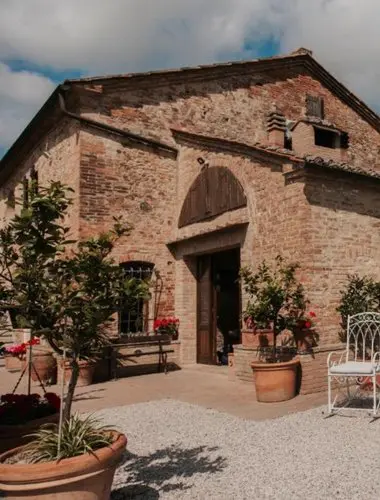
CastelGiocondo was fortified around 1100 to watch the route between the coast and Siena. Today the hamlet belongs to Frescobaldi, and its seven rooms sit inside one of Montalcino's foundational wine estates. Brunello was produced here in the nineteenth century; the vineyards still determine the working day. Breakfast comes from the estate ovens, a small spa faces the rows and contemporary artworks commissioned through the Frescobaldi programme appear between medieval walls. The scale stays surprisingly domestic. For anyone who reads the Val d'Orcia through its wine, this is sleeping inside the label.

Best for

Brunello-led stays where the cellar carries as much importance as the landscape.
tuscany-hotels-tenuta-castelgiocondo-01
tuscany-hotels-tenuta-castelgiocondo-02

Agriturismo Percenna

A working farm above Buonconvento where walkers, cyclists and local tables share the same roads.

Why stay here

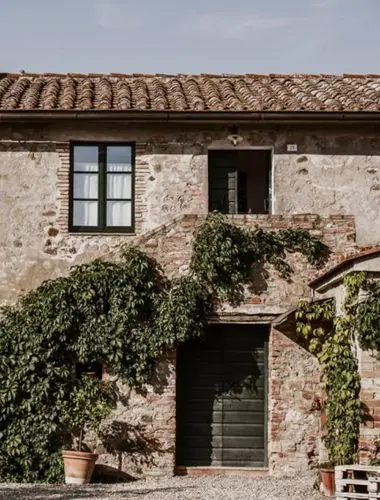
Percenna sits less than a kilometre above Buonconvento, where the Via Francigena and the Eroica's white roads pass through the same stretch of countryside. That position gives the farm its character. Boots and bicycles arrive through the day, ten simple rooms fill and empty, and the restaurant follows the organic fields rather than hotel expectations. Buonconvento's brick walls are close enough to reach on foot. Montalcino lies south, the Crete Senesi north. This is the Val d'Orcia encountered as a route, not a view, with the farm acting as a natural stage along the way.

Best for

Walking and cycling trips where arrival under your own power remains part of the stay.
tuscany-hotels-agriturismo-percenna-01
tuscany-hotels-agriturismo-percenna-02

Locanda in Tuscany

Nine hosted rooms in the quietest part of the valley, with dinner holding the day together.

Why stay here

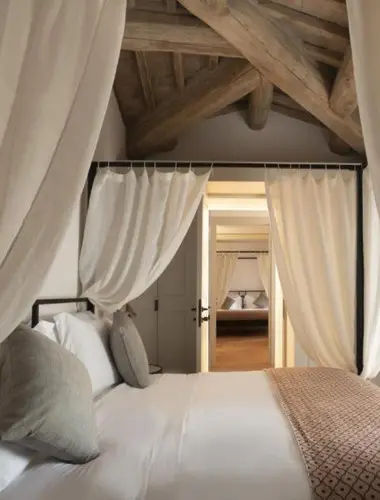
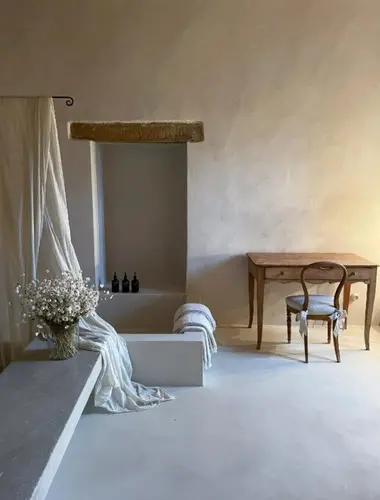
Locanda in Tuscany occupies a seventeenth-century country house near Castiglione d'Orcia, far enough from a village for the silence to become part of the arrangement. Nine rooms keep stone walls, timber beams and linen in a register closer to a private house than a resort. The owners left Milan for this landscape and still shape the stay personally, from dinner built around nearby farms to the walk worth taking that morning. Bagno Vignoni and the Via Francigena are close. Evenings belong to the table. The valley feels larger when the hotel remains this small.

Best for

Hosted stays, long dinners and travellers who want the Val d'Orcia without an audience.
tuscany-hotels-locanda-in-tuscany-01
tuscany-hotels-locanda-in-tuscany-02

La Saracina

Six rooms at the end of a cypress drive, with Pienza holding the opposite hill.

Why stay here

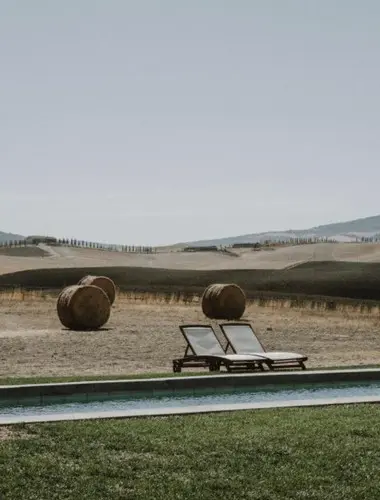
La Saracina keeps the Val d'Orcia small enough to notice. Six rooms, each named after a local vineyard, open onto gardens of lavender and rosemary, with vaulted ceilings inside and wheat fields beyond the pool. Pienza sits across the valley, close enough for pecorino and an evening walk along the walls. Montepulciano, Montalcino and Bagno Vignoni occupy the wider horizon. The house never gathers enough guests to disturb the quiet, which may be its greatest luxury. In a landscape famous for scale, La Saracina makes the experience intimate.

Best for

Couples and slower stays where the valley itself is the reason for booking.
tuscany-hotels-la-saracina-01
tuscany-hotels-la-saracina-02
Tuscany Travel Guide Podere il Casale

Where to Eat Nearby

Podere Il Casale

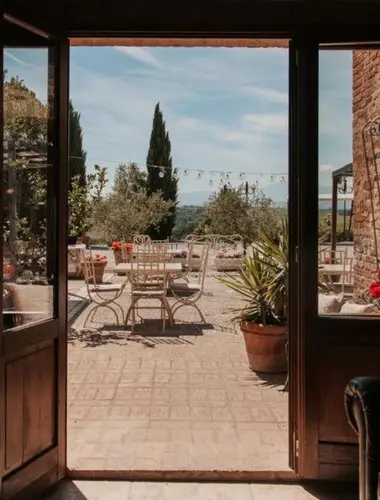
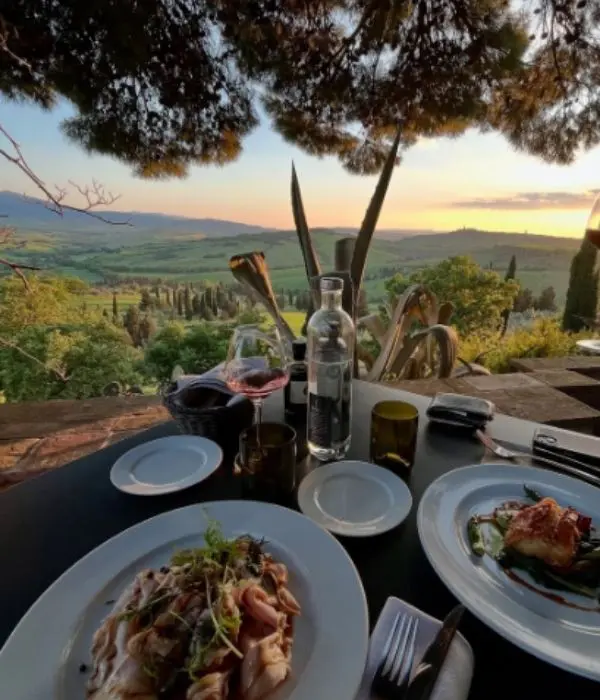
High above the Val d’Orcia outside Pienza, Podere Il Casale looks across rolling fields where the farm’s sheep still graze. Much of the meal begins there, pecorino made on site, vegetables from the garden, olive oil pressed nearby. Lunch unfolds slowly on the terrace with wide valley views. Among places to eat in Tuscany, few feel this connected to the land.

Val d’Orcia or Montepulciano?

The Val d’Orcia is the broader, more landscape-led choice. Its appeal lies in moving between Montalcino, Pienza, Bagno Vignoni and smaller farms, with driving, walking and changing views carrying much of the trip. The Revel Stay guide to Montepulciano offers a more concentrated base, built around one substantial hill town and the Vino Nobile vineyards surrounding it. Choose the Val d’Orcia when the journey between places matters as much as arrival. Choose Montepulciano when you want deeper access to one wine territory, more restaurants nearby and a clearer centre to return to each evening.

Explore Other Neighbourhoods

Hotels In Montepulciano

Montepulciano

Vino Nobile cellars, steep stone streets and a hill town that keeps wine close to everyday life.

hotels-in-chianti-2

Chianti

Working cellars, white roads and wine estates stretched between Florence and Siena.

hotels-in-florence-1

Florence

Renaissance streets, working markets and country estates that keep the city within reach.